The TIPS program is an educational series offered by the NIH Clinical Center that provides information and resources to patients and caregivers during an intense treatment, such as cancer treatment. This video is a companion to the anxiety TIPS video, and may be useful for both patients and caregivers. Published Aug. 28, 2012.
Returning to the podcast is David Greenwood, the author of Overcoming Burnout: Precise Life Solutions for Burnout, Recovery, and Prevention. He is additionally the author of Overcoming Distraction: Thriving with Adult ADHD and hosts the ADHD podcast known as “Overcoming Distractions.”
Learn more about David Greenwood at Salvage his books Overcoming Burnout and Overcoming Distraction at
Hear David Greenwood beforehand on ADHD reWired on episode #165 – Overcoming Distraction with David Greenwood Hear Eric as a visitor on David’s podcast: How does Accountability Assist These with ADHD? | on Overcoming Distractions with David Greenwood Questions/Issues Answered in this Episode:
[00:05:44] What made David want to write about burnout? [00:07:45] What’s burnout? What are the indicators/classic indicators of burnout? [00:09:26] What’s the line distinguishing between despair and burnout? [00:10:45] Alleviating stress is now not the same thing as alleviating the stressor. What’s the variation? [00:13:40] “Burnout restoration begins with the physique.” [00:20:28] How enact all of us know if we’re in a length of stress vs. precise burnout that must be addressed? [00:24:04] What else enact we enact, as antagonistic to advise, to abet with burnout? [00:36:17] Recap of the 6 issues to enact while you commence as a lot as acknowledge you’re headed to burnout. [00:37:48] One more formulation to abet with burnout is… [00:40:03] How enact medicines/alcohol accumulate an set on burnout? 6 issues to enact while you commence as a lot as acknowledge you’re headed to burnout:
Remark with somebody you belief. Hit the gymnasium / enact one thing bodily & advise Take a seat soundless. Are trying for 30 minutes to open. E book a weekend away. Arrange your time. Take a look at your “no” and narrate no to on the very least one thing. Sources & Honorable Mentions:
E book: Burnout: The Secret to Unlocking the Stress Cycle Bonus Mentions:
ADHD reWired episode #404: Let Pleasure be the Measure with Pasha Marlowe Glimpse and be acutely conscious of Eric’s interview with one in every of his previous podcast guests, Pasha Marlowe, on Pasha’s Podcast Neuro*Queering on YouTube: Coming Out Again with Eric Tivers Pasha’s E book: My Subsequent Husband Will Be a Lesbian: A Series of Stories From Womxn Discovering Their Truth Take a look at out the Other Podcasts on the ADHD reWired Podcast Community:
adhdessentials.com with Brendan Mahan hackingyouradhd.com with Will Curb adhddiversified.ca with MJ Siemens The Annual International Convention on ADHD is coming soon! Join nearly about or in particular person in Dallas, Texas! Then, listeners of ADHD reWired can bag 15% off your registration at Or employ the promo code adhdrewiredadhdcon2022 at checkout!
ADHD affects all people even though females in most cases lunge undiagnosed, black females a lot extra so. Abigail Agyei has lived with this disorder for her complete existence, even though she most attention-grabbing purchased identified lately. In her instruct, she explains how and why early prognosis in all people, black females incorporated, is foremost for your complete society and discusses why it isn’t a norm now. Abigail Agyei is an award pleasant, MBE holding, dynamic senior coverage advisor and commerce maker. She has over seven years’ abilities in building and affirming true relationships with within and exterior stakeholders and neighborhood teams, main neighborhood projects with safe abilities supporting voluntary and marginalized teams.
She's also incredibly obsessed on intersectional identities, amplifying marginalised communities' voices and the perfect draw their lived experiences are shaped in the realm. This instruct used to be given at a TEDx tournament the usage of the TED conference structure but independently organized by a local neighborhood. Learn extra at x
Returning to the podcast is David Greenwood, the author of Overcoming Burnout: Real Life Strategies for Burnout, Recovery, and Prevention. He is also the author of Overcoming Distraction: Thriving with Adult ADHD and hosts the ADHD podcast called “Overcoming Distractions.”
Learn more about David Greenwood at Find his books Overcoming Burnout and Overcoming Distraction at
Hear David Greenwood previously on ADHD reWired on episode #165 – Overcoming Distraction with David Greenwood Hear Eric as a guest on David’s podcast: How does Accountability Help Those with ADHD? | on Overcoming Distractions with David Greenwood Questions/Topics Answered in this Episode:
[00:05:44] What made David want to write about burnout? [00:07:45] What is burnout? What are the symptoms/basic signs of burnout? [00:09:26] What is the line distinguishing between depression and burnout? [00:10:45] Alleviating stress is not the same thing as alleviating the stressor. What’s the difference? [00:13:40] “Burnout recovery starts with the body.” [00:20:28] How do we know if we’re in a period of stress vs. actual burnout that needs to be addressed? [00:24:04] What else can we do, other than exercise, to help with burnout? [00:36:17] Recap of the 6 things to do when you begin to recognize you’re headed to burnout. [00:37:48] Another way to help with burnout is… [00:40:03] How do drugs/alcohol affect burnout? 6 things to do when you begin to recognize you’re headed to burnout:
Talk with someone you trust. Hit the gym / do something physical & exercise Sit still. Try for 30 minutes to start. Book a weekend away. Manage your time. Test your “no” and say no to at least one thing. Resources & Honorable Mentions:
Book: Burnout: The Secret to Unlocking the Stress Cycle Bonus Mentions:
ADHD reWired episode #404: Let Pleasure be the Measure with Pasha Marlowe Watch and listen to Eric’s interview with one of his past podcast guests, Pasha Marlowe, on Pasha’s Podcast Neuro*Queering on YouTube: Coming Out Again with Eric Tivers Pasha’s Book: My Next Husband Will Be a Lesbian: A Collection of Stories From Womxn Finding Their Truth Check out the Other Podcasts on the ADHD reWired Podcast Network:
adhdessentials.com with Brendan Mahan hackingyouradhd.com with Will Curb adhddiversified.ca with MJ Siemens The Annual International Conference on ADHD is coming soon! Join virtually or in person in Dallas, Texas! Then, listeners of ADHD reWired can get 15% off your registration at Or use the promo code adhdrewiredadhdcon2022 at checkout!
ADHD is a common mental health condition that begins during youth. It impacts both the child and the family. Learn the signs and symptoms of ADHD and ADHD treatment options.
#ADHD #ADHDSymptoms #MentalHealth
Follow and subscribe to Psych Hub:
d
d
/
/
Learning about mental health is crucial for us all to imagine a better future for everyone. Psych Hub's Mental Health Ally Certification learning hubs will help you become an important steward of your wellbeing and that of your loved ones. Start learning here: www.psychhub.com
In this hour-long ADDitude webinar, David W. Goodman, M.D., FAPA, leads a discussion for clinicians on how to identify ADHD symptoms in adults over age 50, how stimulants fit into a treatment regimen for patients who are taking multiple medications, and more.
A note: This episode is designed for ADHD clinicians, but open to adults with ADHD. Although all are welcome to view the replay, non-clinicians may want to notify the professionals with whom they work of this opportunity and share the audio and slide materials.
Download the slides associated with this webinar here: /
Related Resources: 1. Read: A Critical Need Ignored: Inadequate Diagnosis and Treatment of ADHD After Age 60 /
2. Read: Menopause, Hormones & ADHD: What We Know, What Research is Needed /
3. ADHD in Older Adults: Distinct Diagnostic and Treatment Considerations /
Subscribe to the ADDitude YouTube Channel: w
Visit the ADDitude web site: m Follow ADDitude on Facebook: / Follow ADDitude on Instagram: / Follow ADDitude on Twitter: Follow ADDitude on Pinterest: g
Now Offering Music Distribution: Spotify | Apple Music
Submit Your Music: submit.trulyrap@gmail.com
Support TrulyRap:
/
c
c
Support Popp Hunna:
1
/
#PoppHunna #Adderall #CorvetteCorvette
Copyright Disclaimer Under Section 107 of the Copyright Act 1976, allowance is made for "fair use" for purposes such as criticism, commenting, news reporting, teaching, scholarship, and research. Fair use is a use permitted by copyright statute that might otherwise be infringing. Non-profit, educational or personal use tips the balance in favour of fair use.
Tudo sobre a Família Tagarela AUTISMO e TDAH aqui: Medicamento para TDAH (transtorno de déficit de atenção e hiperatividade) e ANSIEDADE - Ritalina Concerta Venvanse Etc - Dra Ellen Manfrim, neuropediatra, responde no nosso encontro AO VIVO.
No nosso encontro de hoje, Dra Ellen Manfrim, uma neuropediatra muito conhecida e conceituada nos grupos de pais de crianças autistas, responde ao vivo algumas dúvidas dos seguidores. Nesse vídeo ela responde as seguintes perguntas:
1) Como é a combinação de medicamentos p/ autistas c/ TDAH?
2) Efeitos colaterais das medicações para TDAH.
3) Efeitos colaterais das medicações para ansiedade.
4) Medicação Exodus.
5) Ritalina para TDAH até quando usar?
Ao responder essas perguntas, a Dra Ellen fala dos efeitos colaterais da Ritalina e de outros medicamentos para TDAH. Ela comenta sobre todos os remédios que existem para TDAH, como Ritalina LA, Concerta, Venvanse, Strattera, Medato etc. Ela também fala sobre medicações para ansiedade, já que, como a mesma diz: ter TDAH, ser autista nível 1 de suporte e ter ansiedade é um "combo" bem comum de se ver.
Foi pensando em tirar essas e outras dúvidas que convidamos a Dr Ellen Manfrim, da Clínica Integrar (somos Integrar) para responder as perguntas de pais e mães de autistas e de crianças com TDAH. Ainda assim ficou alguma dúvidas? Não tem problema! Deixe a sua pergunta nos comentário, ou dê um pulinho nas redes sociais da Dr Ellen - ela, além de um amor de pessoa, é super solícita e atenciosa!
IG da Dr Ellen:
a
IG da Clínica Integrar: r
Você já assistiu e gostou do vídeo? Então deixa a sua curtida nele e me acompanha nas redes sociais e a Bio da família:
Bio (landpage da Família) a
Youtube: a
Instagram: /
TikTok: /
Facebook: g
Pinterest: /
Twitter: a
E não se esqueça de se inscrever no canal do Youtube.
Para receber aviso de vídeos novos, ative o alerta de notificações (clicando no sininho).
Bjs, Thata e Rafa.
-----------------------------------------------------------------------------------------------------------
Todos os direitos reservados - Mamãe Tagarela / Família Tagarela
Proibida cópia ou reprodução sem autorização do autor.
Royalty-Free Music from Bensound ansiedade medato concerta venvanse strattera tratamento tdah efeitos colaterais ritalina efeitos colaterais concerta efetos colaterais venvanse transtorno de déficit de atenção e hiperatividade transtorno de ansiedade venvanse tdah
00: 00 Introdução
00: 01 No encontro com a Dra Ellen Manfrim, neuropediatra, ela responde algumas dúvidas dos seguidores.
00: 26 Primeira Pergunta: Como é a combinação de medicamentos p/ autistas c/ TDAH?
06: 36 Segunda Pergunta: Efeitos colaterais das medicações para TDAH
08: 06 Terceira Pergunta: Efeitos colaterais das medicações para ansiedade
10: 10 Quarta Pergunta: Medicação Exodus.
11: 56 Quinta Pergunta: Ritalina para TDAH até quando usar?
Ned Hallowell, MD, shares how to live a happy and productive life with ADHD.
Hint: Find a creative outlet that's challenging and stimulating!
#ADHD #AskTheExpert #ColumbiaPsychiatry
__
Follow Dr. Ned Hallowell:
/
l
/
l
m
Follow and subscribe to Psych Hub:
/
b
Learning about mental health is crucial for us all to imagine a better future for everyone. Psych Hub's Mental Health Ally Certification learning hubs will help you become an important steward of your wellbeing and that of your loved ones. Start learning here: www.psychhub.com
__
Psych Hub is an educational service, and the information in this video is not a substitute for professional advice, diagnosis, or treatment. If you or someone you know are experiencing what you believe are mental health symptoms, please consult with a trained medical professional or a licensed mental health provider. We recommend consulting with a licensed behavioral health provider before trying any of the strategies mentioned in our materials.
If you or someone you know is in immediate danger, please call 911. For information on how to find support and treatment, and hotlines for specific issues and audiences, visit Psychhub.com/hotline.
If you or someone you know are having thoughts of suicide or self-harm or are experiencing a mental health crisis, please call a national 24/7 hotline. For United States residents, those are:
National Suicide Prevention Lifeline
For anyone experiencing a mental health crisis.
AVAILABILITY: 24/7/365
PHONE NUMBERS:
Primary line: 1-800-273-8255
Ayuda en Español: 1-888-628-9454
Video relay service: 800-273-8255
TTY: 800-799-4889
Voice/Caption Phone: 800-273-8255
ONLINE CHAT: suicidepreventionlifeline.org/chat/
WEBSITE: suicidepreventionlifeline.org/
Crisis Text Line
For anyone experiencing a mental health crisis.
AVAILABILITY: 24/7/365
TEXT NUMBER:
US & Canada: Text HOME to 741741
UK: Text 85258
Ireland: Text 086 1800 280
WEBSITE: crisistextline.org
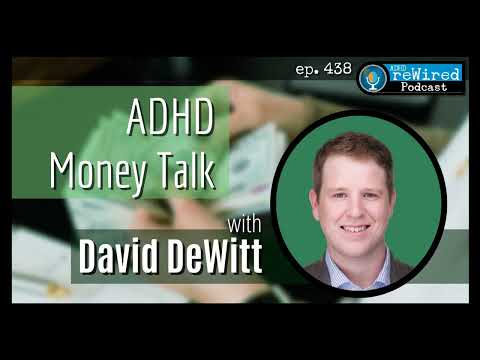
In this episode, Eric is joined by David DeWitt, a registered investment advisor and podcaster who helps adults with ADHD take back control of their money! Although he’s been a registered advisor for six years, it wasn’t until his ADHD awakening in 2021 when he realized that he wanted to help others with ADHD.
David has learned from personal experience that managing your personal finances when you have ADHD can be difficult, even if you’re a professional. He was diagnosed with ADHD and set out to create a financial planning system that worked for ADHD brains. He first tested it on himself. Now, he’s on a mission of helping as many ADHDers as possible!
Eric and David discuss the shame that we feel about our finances and why people contact David to talk to him. They also address where to start when planning for the future. Eric and David then discuss how to use our values to guide financial planning, how we can get past mental clutter when it comes to our finances, as well as ways to be consistent in financial management.
There will also be strategies to tackle debt against spending, reasons why “budget”, “dirty” word, importance of paying taxes on time, as well as a glimpse into investing.
Contact David:
Website: ADHD Money Talk Instagram account: @adhdmoneytalk David DeWitt’s Linktr.ee What does David think about financial planning? How important is it to find our values and put them behind our finances? David helps people get out from under debt. What does it mean for you to place your money where your values are? What can you do to start saving money when you are in debt? How do you address your money situation? What’s the difference between a Roth IRA and a traditional IRA? How can you invest? How can we keep our finances in order? You can also check out other podcasts from the ADHD reWired Podcast Network
adhdessentials.com by Brendan Mahan hackingyouradhd.com With Will Curb adhddiversified.ca
Dr. David A. Sousa is an international consultant in educational neuroscience and author of more than a dozen books that suggest ways that educators and parents can translate current brain research into strategies for improving learning. A member of the Cognitive Neuroscience Society, he has conducted workshops in hundreds of school districts on brain research, instructional skills, and science education at the Pre-K to 12 and university levels. He has made presentations to more than 100,000 educators at national conventions of educational organizations and to regional and local school districts across the U.S., Canada, Europe, Australia, New Zealand, and Asia.
In the spirit of ideas worth spreading, TEDx is a program of local, self-organized events that bring people together to share a TED-like experience. At a TEDx event, TEDTalks video and live speakers combine to spark deep discussion and connection in a small group. These local, self-organized events are branded TEDx, where x=independently organized TED event. The TED Conference provides general guidance for the TEDx program, but individual TEDx events are self-organized.(*Subject to certain rules and regulations)
"When you have ADHD, your brain kind of goes zero to 60 in about two seconds,” says our expert. So, what can you do to help your child with learning and thinking differences manage their anger?
Stephanie Sarkis, PhD, a clinical mental health specialist in child and adolescent counseling, discusses ADHD and anger management techniques. When a child with ADHD starts feeling angry, that anger has the potential to snowball. Hear more from Dr. Sarkis on the relationship between ADHD and anger management, how to help your child express their feelings, and how to know if you should seek outside help.
Click here to subscribe to UNDERSTOOD: w
Connect with UNDERSTOOD:
Resources, Videos and more: g
Like UNDERSTOOD on Facebook: d
Follow UNDERSTOOD on Twitter: g
My guest is Dr. David Spiegel MD, Associate Chair of Psychiatry & Behavioral Sciences, Director of the Center on Stress and Health and Director of the Center for Integrative Medicine at Stanford University School of Medicine. Dr. Spiegel has more than 40 years of clinical and research experience with hypnosis, stress physiology, and psychotherapy. In this episode, we examine the role of clinical hypnosis for the treatment of trauma, chronic pain, anxiety and more. Dr. Spiegel explains how to determine your level of ‘hypnotizability’ and provides case studies of incredible successes with hypnosis to treat a variety of ailments. We also discuss how breathing, vision and directed mental focus can modulate internal states and enhance performance. Additionally, we discuss how the adoption of self-hypnosis techniques can reduce stress and enhance sleep in anyone. Dr. Spiegel teaches us how hypnosis works at the neural circuit level to enhance cognitive flexibility. Throughout the episode, Dr. Spiegel summarizes key clinical trials and peer-reviewed findings and resources to work with a trained clinical professional or to do guided self-hypnosis.
#HubermanLab #Neuroscience #Hypnosis
Watch Andrew’s Hypnosis Session with Dr. Spiegel: 0
Thank you to our sponsors: AG1 (Athletic Greens): Thesis: n ROKA – – code “huberman”
Our Patreon page: n
Supplements from Thorne: n
Social: Instagram – b Twitter – b Facebook – b Website – m Newsletter – k
Dr. David Spiegel Links: Stanford Center for Stress and Health: u Support Dr. Spiegel’s Research at Stanford (tax-deductible): d Dr. Spiegel’s Published Work: C Email: david@reveri.com
Article Links: Posthypnotic Amnesia in Hypnotizability Assessment: Validation of a New Scoring System for the Hypnotic Induction Profile: C Post-traumatic stress disorder and cancer: X Association between Anterior Cingulate Neurochemical Concentration and Individual Differences in Hypnotizability: j Hypnosis reduces distress and duration of an invasive medical procedure for children: f
Other Links: Society for Clinical and Experimental Hypnosis: s American Society for Clinical Hypnosis: Y Watch Andrew’s Hypnosis Session with Dr. Spiegel: 0 Reveri website: Reveri app (iOS): 8 Join the Waitlist for Reveri for Android: 0
Timestamps: 00: 00: 00 Dr. David Spiegel MD, Hypnosis 00: 04: 16 AG1 (Athletic Greens), Thesis, ROKA 00: 09: 09 Clinical Hypnosis 00: 16: 45 Stage Hypnosis 00: 20: 25 Neurobiology of Hypnosis 00: 26: 04 ADHD 00: 28: 22 Hypnosis for Stress & Sleep 00: 32: 12 Hypnosis to Strengthen Neural Connections 00: 37: 19 Restructuring Trauma Narratives 00: 45: 14 Ketamine Therapy 00: 50: 07 Self-directed Hypnosis, Reveri 00: 56: 53 Eliminating Obsessive Thoughts, Superstitions 01: 01: 50 ‘Hypnotizability’, the Spiegel Eye-roll Test 01: 15: 36 EMDR (Eye Movement Desensitization Reprocessing) 01: 21: 43 Confronting Stress & Trauma 01: 27: 56 The Mind-Body Connection 01: 31: 35 Dealing with Grief 01: 35: 45 Hypnosis in Children & Groups 01: 40: 06 Drug Therapies & Hypnosis 01: 42: 39 Breathing Patterns, Peak Performance 01: 50: 00 Zero-Cost Support, YouTube, Spotify & Apple Reviews, Sponsors, Patreon, Thorne, Instagram, Twitter
Please note that The Huberman Lab Podcast is distinct from Dr. Huberman’s teaching and research roles at Stanford University School of Medicine. The information provided in this show is not medical advice, nor should it be taken or applied as a replacement for medical advice. The Huberman Lab Podcast, its employees, guests and affiliates assume no liability for the application of the information discussed.
Title Card Photo Credit: Mike Blabac – m Audio Engineering: Joel Hatstat at High Jump Media
I have supported children with special educational needs and disabilities in both primary and secondary environments. After witnessing first-hand the challenges that many children with ADHD face in education, I felt that we could do more to help.
I believe that some of the current practices in schools are actually undermining our efforts to support these children. We need to move away from a over-reliance on praise and punishment. Through a mindset of curiosity and flexibility, we can support young people with ADHD to develop the skills and resilience to meet the challenges of everyday life. I have supported children with special educational needs and disabilities in both primary and secondary environments. After witnessing first-hand the challenges that many children with ADHD face in education, I felt that we could do more to help. I believe that some of the current practices in schools are actually undermining our efforts to support these children. We need to move away from a over-reliance on praise and punishment. Through a mindset of curiosity and flexibility we can support young people with ADHD to develop the skills and resilience to meet the challenges of everyday life. This talk was given at a TEDx event using the TED conference format but independently organized by a local community. Learn more at x
In this episode, Eric is joined by David DeWitt, a registered investment advisor and podcaster who helps adults with ADHD take back control of their money! Although he’s been a registered advisor for six years, it wasn’t until his ADHD awakening in 2021 when he realized that he wanted to help others with ADHD.
David has learned from personal experience that managing your personal finances when you have ADHD can be difficult, even if you’re a professional. He was diagnosed with ADHD and set out to create a financial planning system that worked for ADHD brains. He first tested it on himself. Now, he’s on a mission of helping as many ADHDers as possible!
Eric and David discuss the shame that we feel about our finances and why people contact David to talk to him. They also address where to start when planning for the future. Eric and David then discuss how to use our values to guide financial planning, how we can get past mental clutter when it comes to our finances, as well as ways to be consistent in financial management.
There will also be strategies to tackle debt against spending, reasons why “budget”, “dirty” word, importance of paying taxes on time, as well as a glimpse into investing.
Contact David:
Website: ADHD Money Talk Instagram account: @adhdmoneytalk David DeWitt’s Linktr.ee What does David think about financial planning? How important is it to find our values and put them behind our finances? David helps people get out from under debt. What does it mean for you to place your money where your values are? What can you do to start saving money when you are in debt? How do you address your money situation? What’s the difference between a Roth IRA and a traditional IRA? How can you invest? How can we keep our finances in order? You can also check out other podcasts from the ADHD reWired Podcast Network
adhdarantials.com by Brendan Mahan hackingyouradhd.com With Will Curb adhddiversified.ca
There are oodles of research on ADHD in young people. There is little research about ADHD in adults. Dr. Kimbery Quinn helps us understand ADHD's effects on adults. She also explains the difficulties they may face in their relationships and lives. There are ways we can help reframe this condition and support people with it. Dr. Kimberly Quinn is a Champlain College professor in Burlington, Vermont. She teaches cognitive psychology and positive psychology. She is also a workshop facilitator and speaks frequently on topics such as positive psychology, well being, trauma-informed teaching, mindfulness training, and mindfulness training for students and faculty, human services agencies, business organizations, and schools. Recent research focuses on the impact of social media on college students' well-being.
Kimberly was a family and child therapist who specialized in ADHD. She stated that ADHD is a misnomer. Attention Deficit Hyperactivity disorder should be ASHD (Attention Surplus high-energy Difference). ADHD can also be a gift due to one's increased ability for divergent thinking – creativity and innovation. This talk was presented at a TEDx event that used the TED conference format, but was independently organized by a local community. Find out more at x
My guest is Dr. David Spiegel MD, Associate Chair of Psychiatry & Behavioral Sciences, Director of the Center on Stress and Health and Director of the Center for Integrative Medicine at Stanford University School of Medicine. Dr. Spiegel has over 40 years clinical and research experience in hypnosis and stress physiology. This episode examines the role of clinical Hypnosis in the treatment of anxiety, chronic pain, trauma, and other conditions. Dr. Spiegel will explain how to determine your level ‘hypnotizability’. He also provides case studies that show the incredible results of hypnosis in treating a wide range of conditions. We also discuss how vision, breathing and directed mental focus can affect internal states and improve performance. We also discuss how self-hypnosis can be used to reduce stress and improve sleep. Dr. Spiegel shows us how hypnosis works at a neural circuit level to increase cognitive flexibility. Dr. Spiegel summarizes key clinical trials, peer-reviewed findings, and resources for working with a trained clinical professional.
#HubermanLab #Neuroscience #Hypnosis
Andrew’s Hypnosis Session With Dr. Spiegel: 0
We are grateful to our sponsors: AG1 (Athletic Greens): Thesis: n ROKA – code “huberman “
Our Patreon page n
Supplements from Thorne n
Social: Instagram – b Twitter – b Facebook – b Website – m Newsletter – k
Dr. David Spiegel Links: Stanford Center for Stress and Health: U Donate to Dr. Spiegel’s Stanford Research (tax-deductible):Dr. Spiegel’s Published Work: C Email: david@reveri.com
Article Links: Assessment of Posthypnotic Amnesia and Hypnotizability: Validation a New Scoring System: C Post-traumatic stress disorder, cancer and X Association between Anterior Cingulate neurochemical concentration and individual differences in hypnotizability: J Hypnosis can reduce distress and length of an invasive procedure for children: f
Other Links: Society for Clinical and Experimental Hypnosis – s American Society for Clinical Hypnosis Y Andrew’s Hypnosis Session With Dr. Spiegel: 0 Reveri website: Reveri app (iOS): 8 Register for the Reveri for Android Waitlist: 0
Timestamps: 00: 00: 00 Dr. David Spiegel MD, Hypnosis 00: 04: 16 AG1 (Athletic Greens), Thesis, ROKA 00: 09: 09 Clinical Hypnosis 00: 16: 45 Stage Hypnosis 00: 20: 25 Neurobiology of Hypnosis 00: 26: 04 ADHD 00: 28: 22 Hypnosis for Stress & Sleep 00: 32: 12 Hypnosis to Strengthen Neural Connections 00: 37: 19 Restructuring Trauma Narratives 00: 45: 14 Ketamine Therapy 00: 50: 07 Self-directed Hypnosis, Reveri 00: 56: 53 Eliminating Obsessive Thoughts, Superstitions 01: 01: 50 ‘Hypnotizability’, the Spiegel Eye-roll Test 01: 15: 36 EMDR (Eye Movement Desensitization Reprocessing) 01: 21: 43 Confronting Stress & Trauma 01: 27: 56 The Mind-Body Connection 01: 31: 35 Dealing with Grief 01: 35: 45 Hypnosis in Children & Groups 01: 40: 06 Drug Therapies & Hypnosis 01: 42: 39 Breathing Patterns, Peak Performance 01: 50: 00 Zero-Cost Support, YouTube, Spotify & Apple Reviews, Sponsors, Patreon, Thorne, Instagram, Twitter
The Huberman Lab Podcast does not include Dr. Huberman’s research and teaching roles at Stanford University School of Medicine. This podcast is not intended to replace medical advice. The Huberman Lab Podcast, its guests, and affiliates, assume no responsibility for the use of the information.
Photo credit for Title Card: Mike Blabac – Joel Hatstat, High Jump Media Audio Engineer
What is a phobia? Phobias can be described as an anxiety disorder in which someone has an irrational, debilitating fear about something. It could be an animal, situation, or natural phenomenon. You can find more videos at.
Osmosis has helped thousands of future and current clinicians. Our tools and materials will help you succeed at school, on boards exams, and as future clinicians. Register for a free trial at
Subscribe to our YouTube channel at
Follow us on social media to get early access to our video releases, practice questions and giveaways.
Facebook: k
Twitter: r
Instagram: m
Our Vision: Everybody who cares about someone will learn through Osmosis.
Our Mission: To provide the best educational experience for caregivers and clinicians around the globe. Find out more at n
Disclaimer: Knowledge Diffusion Inc, a DBA Osmosis, does not offer medical advice. Osmosis and Osmosis content (Osmosis.org YouTube and other channels) are not intended to provide a diagnosis or any other recommendation for treatment. They should not be used as a substitute for professional judgement by a healthcare professional when diagnosing and treating any animal or person. Only a licensed physician can determine if a patient needs medical services or what type of healthcare should be provided. Any questions regarding a medical condition should be directed to a qualified healthcare provider or a doctor.
In this hour-long ADDitude webinar, David W. Goodman, M.D., FAPA, leads a discussion for clinicians on how to identify ADHD symptoms in adults over age 50, how stimulants fit into a treatment regimen for patients who are taking multiple medications, and more.
Note: This episode is intended for ADHD clinicians but is open to all adults with ADHD. All are welcome to watch the replay. However, professionals who work with ADHD may wish to share the audio and slides materials.
You can download the slides from this webinar at /
Similar Resources: 1. Read: An Inadequate Treatment and Diagnosis of ADHD after Age 60 /
2. Read: Menopause and Hormones: What We Know, How Much Research Is Needed /
3. ADHD in Older Adults: Distinct Diagnostic and Treatment Considerations /
Subscribe to the ADDitude YouTube Channel: w
Visit the ADDitude website: m Follow ADDitude on Facebook: / Follow ADDitude on Instagram: / Follow ADDitude Twitter: Follow ADDitude Pinterest: g
Does Concerta cause comedown? How to prevent Concerta from coming down?
Ideal dose for Concerta:
/>
My website: /
Facebook: /
Instagram: /
Personal Instagram: 8
Twitter: d
Dr. David A. Sousa is an international consultant in educational neuroscience and author of more than a dozen books that suggest ways that educators and parents can translate current brain research into strategies for improving learning. A member of the Cognitive Neuroscience Society, he has conducted workshops in hundreds of school districts on brain research, instructional skills, and science education at the Pre-K to 12 and university levels. He has made presentations to more than 100,000 educators at national conventions of educational organizations and to regional and local school districts across the U.S., Canada, Europe, Australia, New Zealand, and Asia.
In the spirit of ideas worth spreading, TEDx is a program of local, self-organized events that bring people together to share a TED-like experience. At a TEDx event, TEDTalks video and live speakers combine to spark deep discussion and connection in a small group. These local, self-organized events are branded TEDx, where x=independently organized TED event. The TED Conference provides general guidance for the TEDx program, but individual TEDx events are self-organized.(*Subject to certain rules and regulations)