There is SOOO much content on YouTube (thank YOU for being here!) Where do you go when you need a hug or a cuddle? Let's not forget about the times when you have to QUIETEN THE FDOWN! Let's talk about 3 ADHD YouTube channels that you should be following and my favorite video from each.
Today, we are focusing on the big channels. Which smaller creators are you most fond of?
Spoilers Below
WHO DO YOU WATCH ... ?
You need to be positive: D
You need to calm down? w
Stop being so serious about D
FREE RESOURCES
ADHD Guides:
NEW: 5 ADHD Motivation Mistakes You Must Avoid s
NEW: ADHD 101 5-Day Program 1
AUDIENCE FAVORITE 10 Productivity Mistakes All ADHDers Make
Action Guides:
Clarity Questionnaire + Life Purpose Tool s
Atomic Habits c
Willpower doesn't work r
Personality isn't permanent
Ultralearning g
MAKE ADHD SLOWER
>SMASH Productivity Training E Course e
>1:1 Coaching With Aron Croft
>Free Interactive Event e
LET'S GET SOCIAL
>Website: m
>TikTok: d
>FB Page: /
>FB Group: 0
>Instagram: /
RECOMMENDED VIDEOS
>MY STORY: Harvard to Minimum Wage
>My experiences with Vyvanse and Concerta and Ritalin.
MY MISSION
To spread awareness about nonhyperactive ADHD (what i call "Hidden ADHD") in order to help those who are suffering. They should know what they can do to help. They should know they are not lazy, unmotivated, or willfully irresponsible. They should know that they have the potential to realize their full potential and live the life of their dreams.
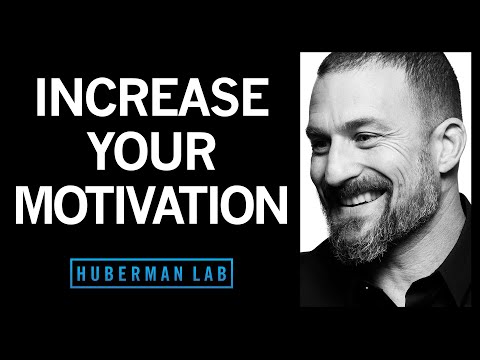
This episode serves as a sort of “Dopamine Masterclass”. I discuss the immensely powerful chemical that we all make in our brain and body: dopamine. I describe what it does and the neural circuits involved. I explain dopamine peaks and baselines, and the cell biology of dopamine depletion. I include 14 tools for how to control your dopamine release for sake of motivation, focus, avoiding and combating addiction and depression, and I explain why dopamine stacking with chemicals and behaviors inevitably leads to states of underwhelm and poor performance. I explain how to achieve sustained increases in baseline dopamine, compounds that injure and protect dopamine neurons including caffeine from specific sources. I describe non-prescription supplements for increasing dopamine—both their benefits and risks—and synergy of pro-dopamine supplements with those that increase acetylcholine.
#HubermanLab #Dopamine #Motivation
Thank you to our sponsors: ROKA – — code “huberman” InsideTracker – n Headspace – r
Logitech Event – Rethink Education: The Biology of Learning l
Support Research in Huberman Lab at Stanford: g
Our Patreon page: n
Supplements from Thorne: n
Social: Instagram – b Twitter – b Facebook – b Website – m Newsletter – k
Links: Review on Dopamine: 7 Cold Exposure & Dopamine: 5
Timestamps: 00: 00: 00 Introduction & Tool 1 to Induce Lasting Dopamine 00: 04: 48 Sponsors: Roka, InsideTracker, Headspace 00: 09: 10 Upcoming (Zero-Cost) Neuroplasticity Seminar for Educators 00: 09: 58 What Dopamine (Really) Does 00: 15: 30 Two Main Neural Circuits for Dopamine 00: 18: 14 How Dopamine Is Released: Locally and Broadly 00: 22: 03 Fast and Slow Effects of Dopamine 00: 25: 03 Dopamine Neurons Co-Release Glutamate 00: 28: 00 Your Dopamine History Really Matters 00: 30: 30 Parkinson’s & Drugs That Kill Dopamine Neurons. My Dopamine Experience 00: 36: 58 Tool 3 Controlling Dopamine Peaks & Baselines 00: 40: 06 Chocolate, Sex (Pursuit & Behavior), Nicotine, Cocaine, Amphetamine, Exercise 00: 46: 46 Tool 4 Caffeine Increases Dopamine Receptors 00: 49: 54 Pursuit, Excitement & Your “Dopamine Setpoint” 00: 56: 46 Your Pleasure-Pain Balance & Defining “Pain” 01: 00: 00 Addiction, Dopamine Depletion, & Replenishing Dopamine 01: 07: 50 Tool 5 Ensure Your Best (Healthy) Dopamine Release 01: 15: 28 Smart Phones: How They Alter Our Dopamine Circuits 01: 19: 45 Stimulants & Spiking Dopamine: Counterproductive for Work, Exercise & Attention 01: 22: 20 Caffeine Sources Matter: Yerba Mate & Dopamine Neuron Protection 01: 24: 20 Caffeine & Neurotoxicity of MDMA 01: 26: 15 Amphetamine, Cocaine & Detrimental Rewiring of Dopamine Circuits 01: 27: 57 Ritalin, Adderall, (Ar)Modafinil: ADHD versus non-Prescription Uses 01: 28: 45 Tool 6 Stimulating Long-Lasting Increases in Baseline Dopamine 01: 37: 55 Tool 7 Tuning Your Dopamine for Ongoing Motivation 01: 47: 40 Tool 8 Intermittent Fasting: Effects on Dopamine 01: 53: 09 Validation of Your Pre-Existing Beliefs Increases Dopamine 01: 53: 50 Tool 9 Quitting Sugar & Highly Palatable Foods: 48 Hours 01: 55: 36 Pornography 01: 56: 50 Wellbutrin & Depression & Anxiety 01: 58: 30 Tool 10 Mucuna Pruriens, Prolactin, Sperm, Crash Warning 02: 01: 45 Tool 11 L-Tyrosine: Dosages, Duration of Effects & Specificity 02: 05: 20 Tool 12 Avoiding Melatonin Supplementation, & Avoiding Light 10pm-4am 02: 07: 00 Tool 13 Phenylethylamine (with Alpha-GPC) For Dopamine Focus/Energy 02: 08: 20 Tool 14 Huperzine A 02: 10: 02 Social Connections, Oxytocin & Dopamine Release 02: 12: 20 Direct & Indirect Effects: e.g., Maca; Synthesis & Application 02: 14: 22 Zero-Cost & Other Ways To Support Podcast & Research
Please note that The Huberman Lab Podcast is distinct from Dr. Huberman’s teaching and research roles at Stanford University School of Medicine. The information provided in this show is not medical advice, nor should it be taken or applied as a replacement for medical advice. The Huberman Lab Podcast, its employees, guests and affiliates assume no liability for the application of the information discussed.
What's the difference between stress, anxiety, and worry? And why does it matter? If we want to resolve our stress and anxiety, we need to know the difference and change how we respond to each form of anxiety. We often use the terms stress and anxiety interchangeably, but when we are lazy with our speech, it makes it harder to learn specific skills to resolve, treat, or cope with anxiety disorders.
Looking for affordable online counseling? My sponsor, BetterHelp, connects you to a licensed professional from the comfort of your own home. Try it now for 10% off: l
Learn more in one of my in-depth mental health courses: />
Support my mission on Patreon: l
Sign up for my newsletter: e
Check out my favorite self-help books: s
Check out my podcast, Therapy in a Nutshell: /
Therapy in a Nutshell, LLC, and the information provided by Emma McAdam are solely intended for informational and entertainment purposes and are not a substitute for advice, diagnosis, or treatment regarding medical or mental health conditions. Although Emma McAdam is a licensed marriage and family therapist, the views expressed on this site or any related content should not be taken for medical or psychiatric advice. Always consult your physician before making any decisions related to your physical or mental health.
About Me:
I’m Emma McAdam. I’m a licensed Marriage and Family Therapist, and I have worked in various settings of change and growth since 2004. My experience includes juvenile corrections, adventure therapy programs, wilderness therapy programs, an eating disorder treatment center, a residential treatment center, and I currently work in an outpatient therapy clinic.
In therapy I use a combination of Acceptance and Commitment Therapy, Systems Theory, positive psychology, and a bio-psycho-social approach to treating mental illness and other challenges we all face in life. The ideas from my videos are frequently adapted from multiple sources. Many of them come from Acceptance and Commitment Therapy, especially the work of Steven Hayes, Jason Luoma, and Russ Harris. The sections on stress and the mind-body connection derive from the work of Stephen Porges (the Polyvagal theory), Peter Levine (Somatic Experiencing) Francine Shapiro (EMDR), and Bessel Van Der Kolk. I also rely heavily on the work of the Arbinger institute for my overall understanding of our ability to choose our life's direction.
And deeper than all of that, the Gospel of Jesus Christ orients my personal worldview and sense of security, peace, hope, and love e
If you are in crisis, please contact the National Suicide Prevention Hotline at or 1-800-273-TALK (8255) or your local emergency services.
Copyright Therapy in a Nutshell, LLC
----
Music licensed from www.Bensound.com or Artlist.io
Images from Freepik.com (premium license), Pixabay, or Wikimedia commons
This episode explains the science of motivation and drive. I explain how dopamine, which is a chemical that we all produce in our brains, drives our desire to achieve and pursue our goals as well as our ability to move and enjoy pleasure. How we can use specific behaviors, reward programs and dopamine-prolactin levels to maintain motivation and pleasure for the long-term is what I discuss. I also talk about dopamine in ADHD, craving, addiction, and some amazing results regarding the specificity of drug effects that are purely based on belief.
#HubermanLab #Motivation #Neuroscience
We are grateful to our sponsors: Athletic Greens – Headspace – Magic Spoon –
Our Patreon page n
Supplements from Thorne n
Link to study / Effects of expectation upon specificity of stimulant effects Social: Instagram – b Twitter – b Facebook – b
Website – m Join the NeuralNet – k
Timestamps below. 00: 00: 00 Introduction 00: 04: 22 Announcement: Spanish Subtitles 00: 05: 06 Emotions, Addiction & Mindset 00: 06: 22 Motivation & Movement: The Dopamine Connection 00: 07: 29 A Double-Edged Dopamine Blade 00: 08: 56 Dopamine Fundamentals: Precursor to Adrenalin 00: 10: 15 The Reward Pathway: An Accelerator & A Brake 00: 12: 10 Motivation=Pleasure Plus Pain 00: 14: 14 The Dopamine Staircase: Food, Sex, Nicotine, Cocaine, Amphetamine 00: 16: 15 Subjective Control of Dopamine Release 00: 17: 40 Social Media and Video Games 00: 18: 15 Addiction & Dopamine: Progressively Diminishing Returns 00: 18: 48 Novelty, Sensation-Seeking & Anticipation 00: 20: 15 Craving: Part Pain, Part Pleasure & Pain Always Prevails 00: 23: 11 Desire Scales With Pain: The Yearning Function 00: 24: 43 The Croissant Craving Circuit 00: 25: 45 “Here and Now” Molecules: Serotonin, Bliss & Raphe Nucleus 00: 26: 26 In Your Skin Or Out In the World 00: 27: 25 Cannabinoids Lethargy & Forgetfulness 00: 28: 15 The Almond Meditation 00: 29: 30 Drugs That Shift Exteroception Versus Interoception 00: 30: 36 Emotional Balance, Active & Passive Manipulation 00: 32: 36 Procrastination: Leveraging Stress, Breathing, Caffeine, L-Tyrosine, Prescription Drugs 00: 37: 04 When Enough Is Never Enough; How Dopamine Undermines Itself 00: 38: 58 Dopamine-Prolactin Dynamics: Sex, Reproduction & Refractory Periods 00: 40: 30 The Coolidge Effect: Novelty-Induced Suppression of Prolactin 00: 42: 22 Vitamin B6, Zinc As Mild Prolactin Inhibitors 00: 43: 25 Schizophrenia, Dopamine Hyperactivity and Side Effects of Anti-Dopaminergic Drugs 00: 45: 08 Prolactin, Post-Satisfaction “Lows” & Extending the Arc of Dopamine 00: 48: 00 The Chemistry of “I Won, But Now What?” 00: 49: 00 Healthy Emotional Development: Child and Parent 00: 50: 03 Never Say “Maybe” (Reward Prediction Error) 00: 52: 02 Surprise! 00: 52: 59 Are You Suppressing Your Drive and Motivation By Working Too Late? 00: 54: 50 Disambiguating Pleasure and Drive: Dopamine Makes Us Anti-Lazy 00: 58: 00 Beta-Phenylethylamine (PEA), & Acetyl L-Carnitine 01: 00: 00 Attention Deficit Disorders, Cal Newport Books, Impulsivity & Obesity 01: 03: 55 Leveraging Dopamine Schedules 01: 05: 22 Subjective Control of Dopamine and Drug Effects: The “Adderall” Experiment 01: 09: 03 Caffeine May Protect Dopamine Neurons, Methamphetamine Kills Them 01: 10: 57 Nicotine: Dopamine, Possible Neuroprotection, Prolactin Increase 01: 11: 53 Gambling, Intermittent Reinforcement, & Persistent Goal Seeking (Bad and Good) 01: 14: 14 Intermittent Halting of Celebration; Enjoy Your Wins, But Not All of Them 01: 18: 38 A Story Example of Intermittent Reward to Maintain Long-Term Drive and Motivation 01: 21: 25 Corrections & Notes About Spanish Captions & Other Languages Soon 01: 24: 00 Synthesis & Framework, Zero-Cost Support & A Note About Sponsors
The Huberman Lab Podcast does not include Dr. Huberman’s research and teaching roles at Stanford University School of Medicine. This podcast is not intended to replace medical advice. The Huberman Lab Podcast, its guests, and affiliates, assume no responsibility for the use of the information.
NOTE FROM TED: While some viewers might find advice provided in this talk to be helpful, please do not look to this talk for medical advice. This talk was recorded at TEDx and has been flagged by TEDx because it seems to be outside TEDx's curatorial guidelines. This talk is based on the speaker's own experiences and understandings of ADHD and the treatments. It does not contain scientific evidence. TEDx events can be organized independently by volunteers. We provide guidelines for organizers. You can find them here: f
Meet Dr. Mushtagh. He is a naturopathic doctor and educator, author, clinic owner and wild harvester. He has a confirmed diagnosis for ADHD. Naturopath This talk was presented at a TEDx event that used the TED conference format, but was independently organized by a community. Find out more at x