“Acetylcholine Excess and Depression: A Connection that Suggests Safely Testable Hypotheses for Lessening Depression”
Depression deserves the same approach and treatment as non-brain-related chronic problems such as arthritis or a bad back.
A study found that a few weeks after receiving botox treatment for wrinkles, around 1/2 of patients found relief from depression. See
Why did botox help?
Ideas:
#1 – Botox works by suppressing the release of acetylcholine.
High levels of acetylcholine are now being looked at as a potential root cause of depression. e
Acetylcholine is synthesized from choline, which is high in animal products, wheat germ, peanuts, broccoli, Brussel sprouts, etc.
#2 – Nicotinic acetylcholine receptors (nAChRs) respond to acetylcholine.
#3 – nAChRs in the brain can become desensitized after repeated exposure to stimulants.
#4 – Recent drug research on new antidepressants has been targeting nAChRs:
So here’s my basic hypothesis: Many of us eat a large amount of choline-rich food, so we can easily synthesize lots of acetylcholine. The constant exposure to plentiful acetylcholine in conjunction with other internal and external stimulators of nAChRs can result in desensitization of the nAChRs in our brains, dysfunction of which receptors is associated with depression. Botox allows a “reboot” of the system by cutting the acetylcholine supply for a while, allowing the nAChRs to become more sensitive again.
And here’s how to test it (beside getting botox treatments): Go on a low-choline diet (unless you’re pregnant or otherwise unable to) for 3-4 days, during which it would probably be good to also avoid anything that would mess with nAChRs (esp. nicotine, alcohol, and recreational drugs). See if you feel different a couple weeks later. Don’t do the low-choline diet for an extended period, though. We need choline, just maybe not quite as constantly as we get it.
Also, try gardening. Soil often contains botox in very small amounts. Therapeutic horticulture has been repeatedly observed to help lessen clinical depression.
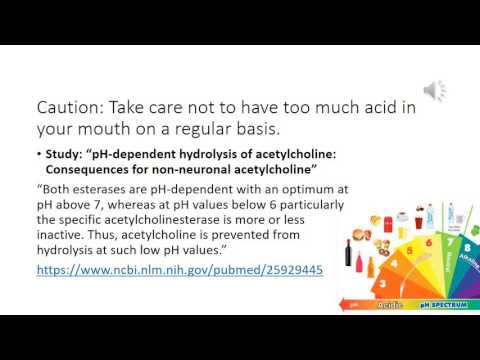
Caution: Take care not to have too much acid in your mouth on a regular basis in order to avoid inactivating an enzyme that breaks down acetylcholine. Study: “pH-dependent hydrolysis of acetylcholine: Consequences for non-neuronal acetylcholine”
“Both esterases are pH-dependent with an optimum at pH above 7, whereas at pH values below 6 particularly the specific acetylcholinesterase is more or less inactive. Thus, acetylcholine is prevented from hydrolysis at such low pH values.”
The brain is right next to the oral/nasal cavity. “University of Iowa neuroscientist John Wemmie, M.D., Ph.D., is interested in the effect of acid in the brain. His studies suggest that increased acidity or low pH, in the brain is linked to panic disorders, anxiety, and depression. But his work also suggests that changes in acidity are important for normal brain activity too.”
Many common soft drinks and beverages have a pH under 4. (There is an error on one PPT slide where I wrote coffee has a pH under 4, but that is incorrect, for coffee has a pH range of 4.5-7; I was probably thinking of lemony iced tea instead.)
Suggestions on helping the mouth not be too acidic: Drink slightly alkaline (pH just over 7) water between meals if you know your mouth environment is unusually acidic. There are filter pitchers that will increase the pH of your drinking water while it sits in the refrigerator.
After drinking soda pop or other highly acidic drinks, rinse your mouth with a mixture of water and a little baking soda. Spit it out afterward.
Watch your use of fresh lemon juice and vinegar, which are highly acidic.
https://grainedecannabis.net/2022/10/03/clinical-depression-acetylcholine-excess-and-3-simple-ways-to-test-a-connection/
Suffer from anxiety or panic? Get free anxiety relief solutions here:
e
What is generalized anxiety disorder exactly (aka GAD disorder) and how does it affect a person? In this video we define generalized anxiety disorder and talk about some of the ways that it will affect a person to hopefully help anyone that's trying to determine if they have GAD if it is in fact the case.
So if you're sitting their asking yourself 'what is GAD?' or are unsure in any way then be sure to check it out!
A generalized anxiety disorder is characterized by:
- Excessive Worrying and Tension.
- Difficulty Sleeping.
- Tiredness.
- Headaches and migraines.
- Difficulty concentrating on things.
- Constant need to use the bathroom/toilet.
- Being easily irritated.
It's a sad but true fact that around 6.8 million adults in the US suffer from anxiety disorder. Women are twice as likely to be affected by it as men are.
It can be extremely debilitating but the good news is that it is treatable. The first step is learn to recognize the signs of generalized anxiety and then if one feels they do have GAD they should seek professional help.


