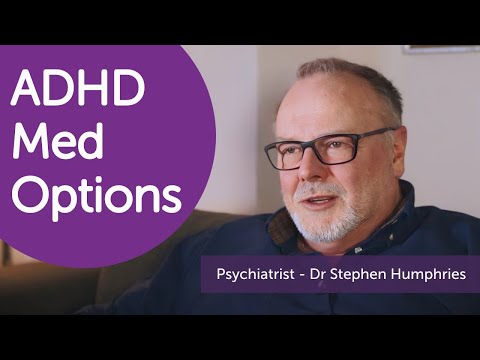
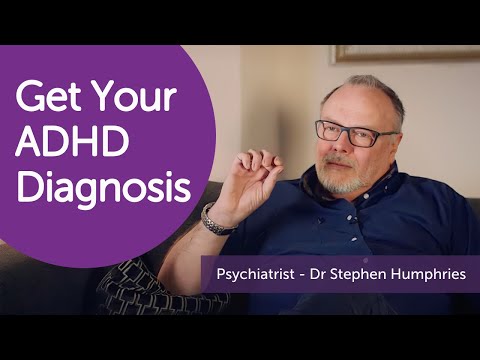
Dr Stephen Humphries of Harley Therapy discusses the variety of treatment options for ADHD and how these differ in availability in the UK compared to the United States. ( .
ADHD, also known as Attention Deficit Hyperactivity Disorder (ADHD), is a neurodevelopment disorder that occurs more often in childhood but can persist into adulthood.
Dr Stephen Humphries FRCPsych is a consultant psychiatrist at Harley Therapy ( Harley Street, London). This video shows the many treatment options available for Adult ADHD, including Ritalin, Adderrall and Vyvanse . ADHD is more common in adults in the UK that it is in the US and Canada. ADHD can present as anxiety, depression, or lack of confidence. However, standard treatment for ADHD can only make it worse.
In the other videos Dr Humphries talks about what treatments are available to treat adult ADHD. He also discusses how medication can be incredibly successful.
Dr Humphries will usually see a new patient within one week of receiving a referral. The assessment is available within 10 days after the appointment. There is no obligation to continue with treatment. Contact us today to schedule an assessment.
This video interview with Dr Humphries explains more about him and Harley Therapy.
Subscribe to our channel so you don’t miss any future videos that offer a wealth information.
What's the connection between ADHD and dyslexia? Why are so many kids diagnosed with both? We’re still learning a lot about these learning and thinking differences and the reasons why they may so often co-occur.
Fumiko Hoeft MD, PhD, professor of psychiatry at the Weill Institute for Neurosciences at UCSF, breaks down some of the possible reasons for this co-occurrence. Find out what leading researchers know and don’t know about the parts of the brain that each of these learning differences stem from. That research could lead to better ADHD treatment and dyslexia treatment in the future.
Click here to subscribe to UNDERSTOOD: w
Connect with UNDERSTOOD:
Resources, Videos and more: g
Like UNDERSTOOD on Facebook: d
Follow UNDERSTOOD on Twitter: g
Follow Understood on Pinterest: /
Dr Stephen Humphries of Harley Therapy discusses ADHD, including symptoms, effects on particular areas of the brain, different treatments, and medication successes ( .
ADHD or Attention Deficit Hyperactivity Disorder, is a neuro development disorder that more commonly presents in childhood, but can and does persist into adulthood.
Dr Stephen Humphries FRC Psych is a Consultant Psychiatrist at Harley Therapy ( Harley Street in London. In this video he talks about how ADHD is diagnosed – by Clinical interview and specialist Psychometric testing.
Although less widely diagnosed in adults in the UK than it is in the US or Canada, ADHD is a relatively common condition. Common symptoms can be anxiety, lack of confidence or depression, but standard treatments for these conditions can just make ADHD worse.
In our other videos, Dr Humphries discusses what kind of treatments are available for adult ADHD and how medication, in particular, can be spectacularly successful.
Dr Humphries can usually see a new patient within a week of a referral with the assessment available within 10 days of the appointment. However there is no obligation to follow up with the treatment. So to book an assessment, contact today.
To understand more about Dr Humphries and his work at Harley Therapy, see this video interview ( ).
Subscribe to our channel and ensure you don’t miss future videos with a wealth of information.
0: 00 Introduction
0: 52 Symptoms of Illness Anxiety disorder
2: 07 Causes of Illness Anxiety disorder
3: 06 Diagnosis of Illness Anxiety disorder
3: 37 Treatment of Illness Anxiety disorder
Hypochondriasis or hypochondria is a condition in which a person is excessively and unduly worried about having a serious illness. An old concept, the meaning of hypochondria has repeatedly changed.[1] It has been claimed that this debilitating condition results from an inaccurate perception of the condition of body or mind despite the absence of an actual medical diagnosis.[2] An individual with hypochondriasis is known as a hypochondriac. Hypochondriacs become unduly alarmed about any physical or psychological symptoms they detect, no matter how minor the symptom may be, and are convinced that they have, or are about to be diagnosed with, a serious illness.[3]
Often, hypochondria persists even after a physician has evaluated a person and reassured them that their concerns about symptoms do not have an underlying medical basis or, if there is a medical illness, their concerns are far in excess of what is appropriate for the level of disease. It is also referred to hypochondriaism which is the act of being in a hypochondriatic state, acute hypochondriaism.[4] Many hypochondriacs focus on a particular symptom as the catalyst of their worrying, such as gastro-intestinal problems, palpitations, or muscle fatigue. To qualify for the diagnosis of hypochondria the symptoms must have been experienced for at least 6 months.[5]
International Classification of Diseases (ICD-10) classifies hypochondriasis as a mental and behavioral disorder. [6] In the Diagnostic and Statistical Manual of Mental Disorders, DSM-IV-TR defined the disorder, "Hypochondriasis", as a somatoform disorder[7] and one study has shown it to affect about 3% of the visitors to primary care settings.[8] The 2013 DSM-5 replaced the diagnosis of hypochondriasis with the diagnoses of somatic symptom disorder (75%) and illness anxiety disorder (25%).[9][10]
What’s the difference between an ADHD brain vs. normal brain? What’s an ADHD brain scan vs. normal brain scan look like? How does the attention deficit hyperactivity disorder brain work? Why is an ADHD brain different? How does ADHD affect the brain? How you can help your child’s brain with ADHD. What is ADHD and what are examples of ADHD treatment for the brain?
Dr. Lori Desautels (Teacher, Author, Professor) discusses different areas of the ADHD brain. What sort of ADHD symptoms occur where and what do they look like? Dr. Sarah Levin Allen (Pediatric Neuropsychologist) talks with SmartCourse founder, Adrien Harrison, and walks us through 4 different ADHD strategies caregivers can use when working with kids with ADHD brains. The clips are taken from Smart Course’s extensive database of masterclasses for caregivers of students with ADHD.
You can have access to this and many other top-quality masterclasses through Smart Course’s ADHD Summit. Go to our website and register now!
___
WANT MORE CONTENT LIKE THIS? ACCESS THE ADHD SUMMIT: VISIT: 1
CHANGE THE WORLD FOR KIDS WITH ADHD Support us on Patreon! Get exclusive perks & merch! VISIT:
DOWNLOAD OUR EXPERT-CURATED LIST OF RESOURCES
Sign-up for our newsletter and we’ll send you our expert-curated list of ADHD resources including:
– General ADHD resources that every caregiver should have – ADHD resources specific to school accommodations and education services – and much, much more…
Visit our website to sign up: r
LEARN MORE ABOUT OUR SUMMIT & COURSE ON HELPING CAREGIVERS OF KIDS WITH ADHD This short preview cannot possibly address all concerns about the topics covered in our summit & course on parenting, educating, and treating kids with ADHD.
For more information about Smart Course’s best content visit: 1
JOIN OUR EXPERT-LED EDUCATION & SUPPORT GROUP FOR PARENTS OF KIDS WITH ADHD
If you have questions, please request to join our Facebook Group Community:
REACH OUT TO US ON SOCIALS
Subscribe to our YouTube channel:
Follow us on Facebook: o
Follow us on Pinterest:
Follow us on LinkedIn: s
Follow us on Twitter:
or email: support@smartcourse.io
We will respond promptly.
For more information about Smart Course in general, please visit: o
Lately been feelin the pressure
Clockin in hours like extra
But you charge me up like a Tesla, woah
Fallin asleep at the red light
Locked in the studio last night
Three days since I've seen the sunlight, woah
But every time I hit a wall
You come over when I call
Keep me up like Adderall
Don't know how ya do it
All the noise inside my head
Fades away when you undress
Paradise inside my bed
Yeah yeah, yeah yeah
I'm fuckin tired
But you got me wired
Ooooh, ya cause it's never hard to focus on you
I'm so exhausted
I'm drained like a faucet
Ooooh, yeah but it's never hard to focus on you
Oh na na na
Focus, focus
Oh na na na
It's never hard to focus on you
Lately my eyes lookin bloodshot
Been on the road like a whole lot
Hotel to hotel it's not nonstop, woah
And you got your finals in grad school
I know that you on your grind too
Girl that's why I fuckin love you, woah
Cause every time I hit a wall
You come over when I call
Keep me up like Adderall
Don't know how ya do it
All the noise inside my head
Fades away when you undress
Paradise inside my bed
Yeah yeah, yeah yeah
I'm fuckin tired
But you got me wired
Ooooh, ya cause it's never hard to focus on you
I'm so exhausted
I'm drained like a faucet
Ooooh, yeah but it's never hard to focus on you
Oh na na na
Focus, focus
Oh na na na
It's never hard to focus on you
➖➖➖➖➖
Show some love to 3starz by hitting the SUBSCRIBE button and click the bell 🔔 to be notified of new upload
This video provides teachers with information about teaching children who have ADHD. The information presented here may also be helpful to other professionals involved in the care and management of youngsters with ADHD (for example, primary care physicians, pediatricians, psychologists, social workers, child-care workers) and parents.
For more on ADHD visit – D
Subscribe to the AboutKidsHealth YouTube channel: 3 ___________________________________________________
This video is provided for general information only. It does not replace a diagnosis or medical advice from a healthcare professional who has examined your child and understands their unique needs. Please speak with your doctor to check if the content is suitable for your situation.
Cette vidéo sert à donner des renseignements généraux seulement. Elle ne remplace pas le diagnostic ou les conseils médicaux d’un professionnel de la santé qui a examiné votre enfant et comprend ses besoins uniques. Veuillez consulter votre médecin pour vérifier si le contenu convient à votre situation.
This video provides teachers with information about teaching children who have ADHD. This information may be useful to parents and other professionals who are involved in the management and care of ADHD children (e.g., primary care physicians, psychologists, child-care workers, social workers, and pediatricians).
For more information on ADHD, visit – D
Subscribe to the AboutKidsHealth YouTube Channel: 3 ___________________________________________________
This video is intended to provide general information. This video does not replace the advice or diagnosis of a qualified healthcare professional who has seen your child and understood their needs. To determine if this content is appropriate for you, please consult your doctor.
Cette video sert a donner des renseignements generaux seulement. Elle ne remplace pas le diagnostic ou les conseils medicaux d’un professionnel de la sante qui a examine votre enfant et comprend ses besoins uniques. Veuillez consulter votre medecin pour verifier si le contenu convient a votre situation.
This animation discusses what it means to have Attention Deficit Hyperactivity Disorder (ADHD).
It was co-produced by children with ADHD, their families and carers, and health professionals in the field. It is based on research evidence as well as ideas from children and individuals with lived experienced of ADHD.
The animation is part of a Wellcome funded project led by Cardiff University.
Interested in sharing our video in schools, children’s groups, or as part of training? We’d love to know.
Please email info@ncmh.info letting us know the name of your organisation, how you’re sharing the video and your target audience, and, if possible, any feedback you received about it. We may be able to offer additional resources and opportunities to take part in ADHD research.
What’s the difference between an ADHD brain vs. normal brain? What’s an ADHD brain scan vs. normal brain scan look like? How does the attention deficit hyperactivity disorder brain work? Why is an ADHD brain different? How does ADHD affect the brain? How you can help your child’s brain with ADHD. What is ADHD and what are examples of ADHD treatment for the brain?
Dr. Lori Desautels (Teacher, Author, Professor) discusses different areas of the ADHD brain. What sort of ADHD symptoms occur where and what do they look like? Dr. Sarah Levin Allen (Pediatric Neuropsychologist) talks with SmartCourse founder, Adrien Harrison, and walks us through 4 different ADHD strategies caregivers can use when working with kids with ADHD brains. The clips are taken from Smart Course’s extensive database of masterclasses for caregivers of students with ADHD.
You can have access to this and many other top-quality masterclasses through Smart Course’s ADHD Summit. Go to our website and register now!
___
WANT MORE CONTENT LIKE THIS? ACCESS THE ADHD SUMMIT: VISIT: 1
CHANGE THE WORLD FOR KIDS WITH ADHD Support us on Patreon! Get exclusive perks & merch! VISIT:
DOWNLOAD OUR EXPERT-CURATED LIST OF RESOURCES
Sign-up for our newsletter and we’ll send you our expert-curated list of ADHD resources including:
– General ADHD resources that every caregiver should have – ADHD resources specific to school accommodations and education services – and much, much more…
Visit our website to sign up: r
LEARN MORE ABOUT OUR SUMMIT & COURSE ON HELPING CAREGIVERS OF KIDS WITH ADHD This short preview cannot possibly address all concerns about the topics covered in our summit & course on parenting, educating, and treating kids with ADHD.
For more information about Smart Course’s best content visit: 1
JOIN OUR EXPERT-LED EDUCATION & SUPPORT GROUP FOR PARENTS OF KIDS WITH ADHD
If you have questions, please request to join our Facebook Group Community:
REACH OUT TO US ON SOCIALS
Subscribe to our YouTube channel:
Follow us on Facebook: o
Follow us on Pinterest:
Follow us on LinkedIn: s
Follow us on Twitter:
or email: support@smartcourse.io
We will respond promptly.
For more information about Smart Course in general, please visit: o
Ned Hallowell, MD, shares how to live a happy and productive life with ADHD.
Hint: Find a creative outlet that's challenging and stimulating!
#ADHD #AskTheExpert #ColumbiaPsychiatry
__
Follow Dr. Ned Hallowell:
/
l
/
l
m
Follow and subscribe to Psych Hub:
/
b
Learning about mental health is crucial for us all to imagine a better future for everyone. Psych Hub's Mental Health Ally Certification learning hubs will help you become an important steward of your wellbeing and that of your loved ones. Start learning here: www.psychhub.com
__
Psych Hub is an educational service, and the information in this video is not a substitute for professional advice, diagnosis, or treatment. If you or someone you know are experiencing what you believe are mental health symptoms, please consult with a trained medical professional or a licensed mental health provider. We recommend consulting with a licensed behavioral health provider before trying any of the strategies mentioned in our materials.
If you or someone you know is in immediate danger, please call 911. For information on how to find support and treatment, and hotlines for specific issues and audiences, visit Psychhub.com/hotline.
If you or someone you know are having thoughts of suicide or self-harm or are experiencing a mental health crisis, please call a national 24/7 hotline. For United States residents, those are:
National Suicide Prevention Lifeline
For anyone experiencing a mental health crisis.
AVAILABILITY: 24/7/365
PHONE NUMBERS:
Primary line: 1-800-273-8255
Ayuda en Español: 1-888-628-9454
Video relay service: 800-273-8255
TTY: 800-799-4889
Voice/Caption Phone: 800-273-8255
ONLINE CHAT: suicidepreventionlifeline.org/chat/
WEBSITE: suicidepreventionlifeline.org/
Crisis Text Line
For anyone experiencing a mental health crisis.
AVAILABILITY: 24/7/365
TEXT NUMBER:
US & Canada: Text HOME to 741741
UK: Text 85258
Ireland: Text 086 1800 280
WEBSITE: crisistextline.org
Dr Stephen Humphries of Harley Therapy discusses ADHD, including symptoms, effects on particular areas of the brain, different treatments, and medication successes ( .
ADHD or Attention Deficit Hyperactivity Disorder, is a neuro development disorder that more commonly presents in childhood, but can and does persist into adulthood.
Dr Stephen Humphries FRC Psych is a Consultant Psychiatrist at Harley Therapy ( Harley Street in London. In this video he talks about how ADHD is diagnosed – by Clinical interview and specialist Psychometric testing.
Although less widely diagnosed in adults in the UK than it is in the US or Canada, ADHD is a relatively common condition. Common symptoms can be anxiety, lack of confidence or depression, but standard treatments for these conditions can just make ADHD worse.
In our other videos, Dr Humphries discusses what kind of treatments are available for adult ADHD and how medication, in particular, can be spectacularly successful.
Dr Humphries can usually see a new patient within a week of a referral with the assessment available within 10 days of the appointment. However there is no obligation to follow up with the treatment. So to book an assessment, contact today.
To understand more about Dr Humphries and his work at Harley Therapy, see this video interview ( ).
Subscribe to our channel and ensure you don’t miss future videos with a wealth of information.
We all feel stressed at times, even anxious. But what is stress? What is anxiety? This video outlines the differences and similarities between both and how to cope when they are impacting your life!
What’s the difference between an ADHD brain vs. normal brain? What’s an ADHD brain scan vs. normal brain scan look like? How does the attention deficit hyperactivity disorder brain work? Why is an ADHD brain different? How does ADHD affect the brain? How you can help your child’s brain with ADHD. What is ADHD and what are examples of ADHD treatment for the brain?
Dr. Lori Desautels (Teacher, Author, Professor) discusses different areas of the ADHD brain. What sort of ADHD symptoms occur where and what do they look like? Dr. Sarah Levin Allen (Pediatric Neuropsychologist) talks with SmartCourse founder, Adrien Harrison, and walks us through 4 different ADHD strategies caregivers can use when working with kids with ADHD brains. The clips are taken from Smart Course’s extensive database of masterclasses for caregivers of students with ADHD.
You can have access to this and many other top-quality masterclasses through Smart Course’s ADHD Summit. Go to our website and register now!
___
WANT MORE CONTENT LIKE THIS? ACCESS THE ADHD SUMMIT: VISIT: 1
CHANGE THE WORLD FOR KIDS WITH ADHD Support us on Patreon! Get exclusive perks & merch! VISIT:
DOWNLOAD OUR EXPERT-CURATED LIST OF RESOURCES
Sign-up for our newsletter and we’ll send you our expert-curated list of ADHD resources including:
– General ADHD resources that every caregiver should have – ADHD resources specific to school accommodations and education services – and much, much more…
Visit our website to sign up: r
LEARN MORE ABOUT OUR SUMMIT & COURSE ON HELPING CAREGIVERS OF KIDS WITH ADHD This short preview cannot possibly address all concerns about the topics covered in our summit & course on parenting, educating, and treating kids with ADHD.
For more information about Smart Course’s best content visit: 1
JOIN OUR EXPERT-LED EDUCATION & SUPPORT GROUP FOR PARENTS OF KIDS WITH ADHD
If you have questions, please request to join our Facebook Group Community:
REACH OUT TO US ON SOCIALS
Subscribe to our YouTube channel:
Follow us on Facebook: o
Follow us on Pinterest:
Follow us on LinkedIn: s
Follow us on Twitter:
or email: support@smartcourse.io
We will respond promptly.
For more information about Smart Course in general, please visit: o
This video provides an understanding of Adderall, a drug that is prescribed for individuals with attention-deficit hyperactivity disorder (ADHD). Information regarding how the drug works to reduce symptoms is covered. The video also raises awareness about the side effects and potential negative consequences of Adderall abuse, as this drug is used as a study aid.
This video was made by McMaster students Marija Damjanovska, Sherry Feldman, Rammiyaa Devan, Raavi Parhar and Veronica Sunbaty in collaboration with the McMaster Demystifying Medicine Program.
Subscribe to the McMaster Demystifying Medicine YouTube channel: e
This video is provided for general and educational information only. Please consult your health care provider for Information about your health.
Copyright McMaster University 2019.
#DemystifyingMedicine, #MentalHealth
References:
Furman, L. (2005). What is attention-deficit hyperactivity disorder (ADHD)?. Journal of child neurology, 20(12), 994-1002.
Hanson, C. L., Burton, S. H., Giraud-Carrier, C., West, J. H., Barnes, M. D., & Hansen, B. (2013). Tweaking and tweeting: exploring Twitter for nonmedical use of a psychostimulant drug (Adderall) among college students. Journal of medical Internet research, 15(4), e62.
Lawson, J., Joern, J., Moneer, O., & Mensah, T. (2015). Addicted to Adderall. Columbia Undergraduate Science Journal, 9(2015).
Low, K. G., & Gendaszek, A. E. (2002). Illicit use of psychostimulants among college students: a preliminary study. Psychology, Health & Medicine, 7(3), 283-287.
Marks, D. H. (2008). Cardiomyopathy due to ingestion of Adderall. American journal of therapeutics, 15(3), 287-289.
Matthew D. Varga (2012) Adderall Abuse on College Campuses: A Comprehensive Literature Review, Journal of Evidence-Based Social Work, 9:3, 293-313.
Sherzada, A. (2012). An analysis of ADHD drugs: Ritalin and Adderall. JCCC Honors Journal, 3(1), 2.
Stolz, S. (2012). Adderall Abuse: Regulating the Academic Steroid. JL & Educ., 41, 585.
Varga, M. D. (2012). Adderall abuse on college campuses: a comprehensive literature review. Journal of evidence-based social work, 9(3), 293-313.
Uddin, M. S., Sufian, M. A., Kabir, M. T., Hossain, M. F., Nasrullah, M., & Islam, I. (2017). Amphetamines: Potent recreational drug of abuse. J Addict Res Ther, 8(4), 1-12.
This video provides teachers with information about teaching children who have ADHD. This information may be useful to parents and other professionals who are involved in the management and care of ADHD children (e.g., pediatricians, psychologists and child-care workers).
For more information on ADHD, visit – D
Subscribe to the AboutKidsHealth YouTube Channel: 3 ___________________________________________________
This video is intended to provide general information. This video does not replace the advice or diagnosis of a qualified healthcare professional who has seen your child and understood their needs. To determine if this content is appropriate for you, please consult your doctor.
Cette video sert a donner des renseignements generaux seulement. Elle ne remplace pas le diagnostic ou les conseils medicaux d’un professionnel de la sante qui a examine votre enfant et comprend ses besoins uniques. Veuillez consulter votre medecin pour verifier si le contenu convient a votre situation.