Today I most earn money working for The Man. But soon I’ll just be working for you once I am monetized!!
https://bestanxietycrystals.com/update-watch-hours-on-the-rise/
Today I most earn money working for The Man. But soon I’ll just be working for you once I am monetized!!
Today I most earn money working for The Man. But soon I’ll just be working for you once I am monetized!!
Today I most earn money working for The Man. But soon I’ll just be working for you once I am monetized!!
Today I most earn money working for The Man. Soon, however, I will only be working for you once my monetization is complete! !
Today I most earn money working for The Man. But soon I’ll just be working for you once I am monetized!!

“You develop a codependent relationship with work or with the world as a person of color because you end up playing to how people see you.” This episode of ADHD reWired features Eric Tivers as host and Romanza McAllister as guest. Romanza McAllister, LCSW, is a psychotherapist. She graduated in 2008 from Hunter College School of Social Work where she studied case management and groupwork. Romanza has been providing family and focused solution group counseling in both outpatient and inpatient settings for the past ten years.
Romanza discusses her experiences as a black teenager diagnosed with ADHD when she was ten years old. She also talks about the impact it had on her career and school years. Romanza talks about her experience working for herself, and how it has helped her feel relieved that she doesn’t need to wonder why she was hired.
Eric asks questions that he is not comfortable with to help him learn how to approach certain topics. Romanza explains that there is no color blindness, and it is our responsibility to create safe spaces through reflective and empathic listening.
Romanza speaks out about how it feels to be validated by people asking her questions about her life as a woman of colour. Romanza says it makes her feel validated when people ask her questions about her life. Romanza and Eric also discuss RSD and the triggers.
Is sensitivity training sufficient? Romanza believes that everyone can benefit from antiracism training, regardless of their race. She also discusses what they can do as a policy perspective around ADHD, children and schools, so that people of colour don’t need to be black or ADHD. They can be themselves. This is an inspiring conversation that all should hear.
You’ll learn:
[03: 18] Welcome to the show, Romanza! [03: 42] Romanza shares her experience of being diagnosed at 10 with ADHD and as a child of color. [06: 38] How did the family deal with your ADHD diagnosis? [07: 57] Romanza speaks about dealing with ADHD throughout her school years. [11: 37] Romanza discusses being a woman of color with ADHD and how that has affected her work history. [14: 17] Have you ever sat at your desk and wondered why you were hired? [16: 12] Romanza speaks about working for herself and how it makes her feel. [19: 38] Listen as Eric shares that Issues around social justice fire people up with ADHD. [25: 03] Eric talks about asking Romanza some hard questions. [26: 16] Romanza shares that talking to progressive people can be difficult because they are sometimes fragile. [26: 52] There is no such thing as color blindness. [28: 00] Creating a safe space through empathic and reflective listening. [29: 51] Romanza shares a story about micro-invalidation. [33: 28] When you get asked a question like what does it feel like to be a black person, is there validation in that someone is asking the question? [35: 56] Romanza says to ask but ask permission to the client first. [40: 16] Eric defines RSD because it is becoming more talked about in the community. [41: 46] Romanza discusses RSD and how it can be triggered when trying to have white/black conversations. [44: 01] Romanza speaks about the things she has to consider before she reacts to a situation. [47: 21] Romanza says she likes the idea of this racial RSD feedback loop. [48: 02] Romanza speaks about the story of a young girl that didn’t turn in her homework. [48: 50] Romanza believes that everyone can benefit from anti-racist training no matter what the color. [50: 34] Is sensitivity training enough? [52: 40] Romanza speaks about what needs to be done from a policy standpoint in the ADHD space to create more equity. [54: 10] Say the words, address the thing! [55: 10] Romanza believes that everyone should check their bias with the Project Implicit bias meter. [56: 38] Thank you for being on the show! [57: 24] If you are a regular listener, consider becoming a patron click on our Patreon tap at www.ADHDreWired.com Find Romanza:
Romanza McAllister Email Project Implicit Facebook | LinkedIn Romanza McAllister,LCSW Psychotherapist Diversity Is Dead: Freestyle Thoughts on Neurodiversity, Black Life, Reconciliation and the Commodification of “Wokeness” Catch-22: ADHD, Work, & the “Black Tax” | ADDA – Attention Deficit Disorder Association African American/Black Diaspora +ADHD Peer Support Group | ADDA – Attention Deficit Disorder Association Use my Audible.com affiliate link for your favorite titles: d
ADHD reWired Coaching and Accountability Groups The 16th season of the ADHD reWired Coaching and Accountability groups are ending soon. ArC 17 Summer Sessions run July 11th – Sept. 19th. There are only 9 spots left. Please visit coachingrewired.com to learn more and sign-up for our Last Scheduled Registration Event on June 11th at 3 PM CT. You don’t want to miss it!
Patreon: Support the Podcast
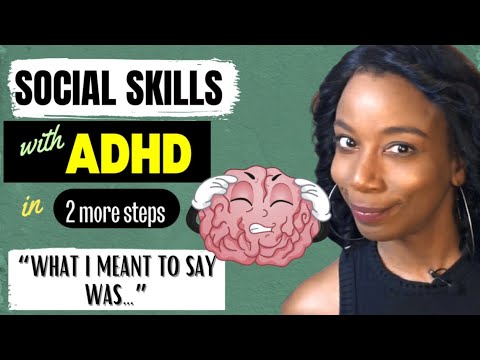
Picking up on the drama of the previous episode, we continue the series on how ADHD affects our social skills. As many of you know, social skills are more challenging for us than others who don’t have #ADHD. And even within the ADHD population, there are some who are more impacted by this symptom than others.
WHY THIS TOPIC?
I chose “Over/Under reacting” as the number-three of the most worrisome Social Skills because it is a theme that has popped up in my life enough that caused me to think there was something wrong with my personality. I’ve lost friends over this particular quirk and it’s led me down paths where I prioritized things that didn’t need immediate attention and catastrophized events that didn’t warrant the drama I gave to it.
NEED TO CATCH UP?
Need to catch up on the videos about Social Skills? Find them here:
Ep. 5 “That Was Awkward” ADHD and Social Awkwardness” Q
Ep. 5.2 “Five (5) Tips to Fix Your Social Skills Ills” 8
Here are the Social Skills covered so far in Ep. 5.2
5. Blowing off or canceling plans on friends and other commitments.
4. Not paying attention to what is being said to you in conversations
3. (this episode) Under Reacting or Over Reacting (or “inappropriate” reactions to information or circumstances presented.
INTERESTING STUFF ABOUT YOUR ADHD
Check out this helpful article from Understood.org The information applies to adults and children.
s
As mentioned in this episode, learn here how raising your awareness can improve your social skills.
BE AWARE! ADHD
How does your awareness affect your social skills, your life skills even?
Find out here!
ADHD Insight: Third-Person Awareness
Y
FIND OUT IF YOU REALLY HAVE ADHD
If you have not received an official ADHD diagnosis but want one, here is a self-assessment to help you on your journey. The assessment is provided by the Attention Deficit Disorder Association. NOTE: Just like all self-assessments on the internet, this will not give you an official medical diagnosis of ADHD. Self-diagnosis is the conversation starters between you and your healthcare provider when seeking a medical diagnosis.
ADHD Self-assessment
/
Your diagnosis must come from a healthcare professional from any of the following areas of practice (this is not an exhaustive list.)
Psychiatrist
Psychologist (will refer you to a psychiatrist for prescription meds if you choose to try them)
General Practitioner
Internist (that’s where I received my first prescriptions)
Pediatrician
Neurologist
Any licensed Medical Doctor or health care professional who is knowledgeable about ADHD, current on treatment options, and ideally, has experience treating adult ADHD
MUSIC CREDITS:
Funk City by Reatch
Creative Commons — Attribution 3.0 Unported— CC BY 3.0
Free Download / Stream:
Music promoted by Audio Library 8
Jazzaddict’s Intro by Cosimo Fogg (201)
Creative Commons — Attribution 3.0 Unported— CC BY 3.0
Free Download / Stream:
Music promoted by Audio Library M
Swing Rabbit ! Swing ! by Amarià
Creative Commons — Attribution 3.0 Unported — CC BY 3.0
Free Download / Stream:
Music promoted by Audio Library M
“You develop a codependent relationship with work or with the world as a person of color because you end up playing to how people see you.” This episode of ADHD reWired features Eric Tivers, LCSW, and Romanza McAllister, LCSW. Romanza is a psychotherapist, and in 2008 she graduated from Hunter College School of Social Work, where she majored in case management and group work. Romanza has been providing family and focused solution group counseling in both outpatient and inpatient settings for the past ten years.
Romanza discusses her experiences as a black teenager diagnosed with ADHD when she was ten years old. She also talks about the impact it had on her career and school years. Romanza talks about her experience working for herself, and how it has helped her feel relieved that she doesn’t need to wonder why she was hired.
Eric asks questions that he is not comfortable with to help him learn how to approach certain topics. Romanza explains that there is no color blindness, and it’s our responsibility create safe spaces through reflective and empathic listening.
Romanza shares how it feels to be validated by people asking her questions about being a woman from color. Romanza says it makes her feel validated when people ask her questions about her life. Romanza and Eric also discuss RSD and the possible triggers.
Is sensitivity training sufficient? Romanza believes that everyone can benefit from antiracism training, regardless of their race. She also discusses what they can do as a policy perspective around ADHD, children and schools, so that people of colour don’t need to be black or ADHD. They can be themselves. This is an inspiring conversation that all should hear.
You’ll learn:
Romanza, welcome to the show! [03:42] Romanza shares her experience of being diagnosed at 10 with ADHD and as a child of color. [06:38] What was your family’s response to your ADHD diagnosis? [07:57] Romanza talks about her experiences with ADHD during school. [11:37] Romanza talks about being a woman with ADHD and how it has affected her career. [14:17] Ever sat at your desk wondering why you were hired? [16:12] Romanza talks about her experience working for herself and the impact it has on her feelings. [19:38] Eric shares his belief that ADHD people are motivated by social justice issues. [25:03] Eric discusses the importance of asking Romanza hard questions. [26:16] Romanza says that it can be hard to talk with progressive people because they are often fragile. [26:52] Color blindness is not a thing. [28:00] Safe space through reflective and empathic listening. [29:51] Romanza shares his story about micro-invalidation. [33:28] If someone asks you a question such as “What does it feel like being a black person?”, is that validation? [35:56] Romanza advises asking the question, but asking permission first. [40:16] Eric describes RSD as it is being more widely discussed in the community. [41:46] Romanza talks about RSD and the triggers that can occur when having white/black conversations. [44:01] Romanza talks about what she must consider before she reacts in a given situation. [47:21] Romanza says she likes the idea of this racial RSD feedback loop. [48:02] Romanza speaks about the story of a young girl that didn’t turn in her homework. [48:50] Romanza believes that everyone can benefit from anti-racist training no matter what the color. [50:34] Is sensitivity training enough? [52:40] Romanza speaks about what needs to be done from a policy standpoint in the ADHD space to create more equity. [54:10] Say the words, address the thing! [55:10] Romanza believes that everyone should check their bias with the Project Implicit bias meter. [56:38] Thank you for being on the show! [57:24] If you are a regular listener, consider becoming a patron click on our Patreon tap at www.ADHDreWired.com Find Romanza:
Romanza McAllister Email Project Implicit Facebook | LinkedIn Romanza McAllister,LCSW Psychotherapist Diversity Is Dead: Freestyle Thoughts on Neurodiversity, Black Life, Reconciliation and the Commodification of “Wokeness” Catch-22: ADHD, Work, & the “Black Tax” | ADDA – Attention Deficit Disorder Association African American/Black Diaspora +ADHD Peer Support Group | ADDA – Attention Deficit Disorder Association Use my Audible.com affiliate link for your favorite titles: d
ADHD reWired Coaching and Accountability Groups The 16th season of the ADHD reWired Coaching and Accountability groups are ending soon. ArC 17 Summer Sessions run July 11th – Sept. 19th. There are only 9 spots left. Please visit coachingrewired.com to learn more and sign-up for our Last Scheduled Registration Event on June 11th at 3 PM CT. You don’t want to miss it!
Patreon: Support the Podcast
How to get a Diagnosis
To receive
perks, join this channel n
Please be aware that I am not a physician.
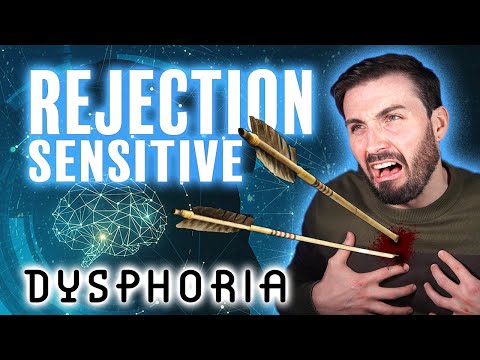
RSD is an often overlooked symptom of ADHD. This makes you extremely sensitive to social disapproval. Critique is felt with an overwhelming intensity.
#Adhd #RejectionSensitiveDysphoria #RSD
Picking up on the drama of the previous episode, we continue the series on how ADHD affects our social skills. As many of you know, social skills are more challenging for us than others who don’t have #ADHD. And even within the ADHD population, there are some who are more impacted by this symptom than others.
WHY THIS TOPIC?
I chose “Over/Under reacting” as the number-three of the most worrisome Social Skills because it is a theme that has popped up in my life enough that caused me to think there was something wrong with my personality. I’ve lost friends over this particular quirk and it’s led me down paths where I prioritized things that didn’t need immediate attention and catastrophized events that didn’t warrant the drama I gave to it.
NEED TO CATCH UP?
Need to catch up on the videos about Social Skills? Find them here:
Ep. 5 “That Was Awkward” ADHD and Social Awkwardness” Q
Ep. 5.2 “Five (5) Tips to Fix Your Social Skills Ills” 8
Here are the Social Skills covered so far in Ep. 5.2
5. Blowing off or canceling plans on friends and other commitments.
4. Not paying attention to what is being said to you in conversations
3. (this episode) Under Reacting or Over Reacting (or “inappropriate” reactions to information or circumstances presented.
INTERESTING STUFF ABOUT YOUR ADHD
Check out this helpful article from Understood.org The information applies to adults and children.
s
As mentioned in this episode, learn here how raising your awareness can improve your social skills.
BE AWARE! ADHD
How does your awareness affect your social skills, your life skills even?
Find out here!
ADHD Insight: Third-Person Awareness
Y
FIND OUT IF YOU REALLY HAVE ADHD
If you have not received an official ADHD diagnosis but want one, here is a self-assessment to help you on your journey. The assessment is provided by the Attention Deficit Disorder Association. NOTE: Just like all self-assessments on the internet, this will not give you an official medical diagnosis of ADHD. Self-diagnosis is the conversation starters between you and your healthcare provider when seeking a medical diagnosis.
ADHD Self-assessment
/
Your diagnosis must come from a healthcare professional from any of the following areas of practice (this is not an exhaustive list.)
Psychiatrist
Psychologist (will refer you to a psychiatrist for prescription meds if you choose to try them)
General Practitioner
Internist (that’s where I received my first prescriptions)
Pediatrician
Neurologist
Any licensed Medical Doctor or health care professional who is knowledgeable about ADHD, current on treatment options, and ideally, has experience treating adult ADHD
MUSIC CREDITS:
Funk City by Reatch
Creative Commons — Attribution 3.0 Unported— CC BY 3.0
Free Download / Stream:
Music promoted by Audio Library 8
Jazzaddict’s Intro by Cosimo Fogg (201)
Creative Commons — Attribution 3.0 Unported— CC BY 3.0
Free Download / Stream:
Music promoted by Audio Library M
Swing Rabbit ! Swing ! by Amarià
Creative Commons — Attribution 3.0 Unported — CC BY 3.0
Free Download / Stream:
Music promoted by Audio Library M
Product Description Undated ✓ ✓ ✓ ✓ ✓ ✓ Habit Tracker ✓ ✓ ✓ ✓ ✓ ✓ Academic Goals ✓ ✓ ✓ ✓ ✓ Password Manager No No No No ✓ ✓ Weekly Reflectio...


