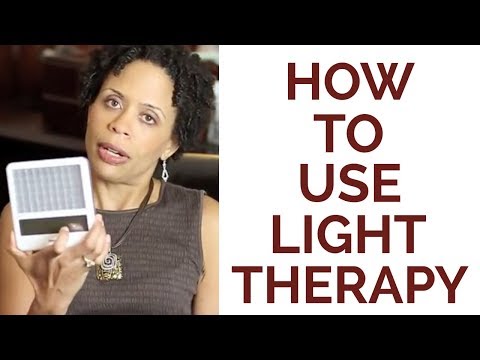
A light box can be useful for more than seasonal affective disorder. As an adjunct treatment to depression, it has been suggested. It can also shift your body clock. This video will show you how to use a lightbox.
There are many commercial brands, but the Phillips Golyte is the one shown in the video. This link will take you to the latest version: 9
Light therapy is another popular brand, litebook.com has a lot of educational information.
For more videos, visit my YouTube channel: s
Get notified of my latest videos by signing up: 3
Disclosure: The above affiliate link may earn me a commission but it is free for you. Thank you for supporting my channel.
Perry Dripps was recently diagnosed with ADHD at the age of 33. He discusses distractions and how they can hinder ADHD sufferers as well as those without the condition. Perry, a member the Sustainability Institute and an avid guitarist, hiker, and cook, explains how following our passions can help you refocus. He explains how society can be made more productive and healthy. This talk was recorded in accordance with the COVID -19 safety guidelines. Clapping was added after-production. Teacher, Sustainability Professional, Musician, Cook. This talk was delivered at a TEDx event that used the TED conference format, but was organized locally by a community. Find out more at x
A light box can be useful for more than seasonal affective disorder. As an adjunct treatment to depression, it has been suggested. It can also shift your body clock. This video will show you how to use a lightbox.
There are many commercial brands, but the Phillips Golyte is the one shown in the video. This link will take you to the latest version: 9
Light therapy is another popular brand, litebook.com has a lot of educational information.
For more videos, visit my YouTube channel: s
Get notified of my latest videos by signing up: 3
Disclosure: The above affiliate link may earn me a commission but it is free for you. Thank you for supporting my channel.
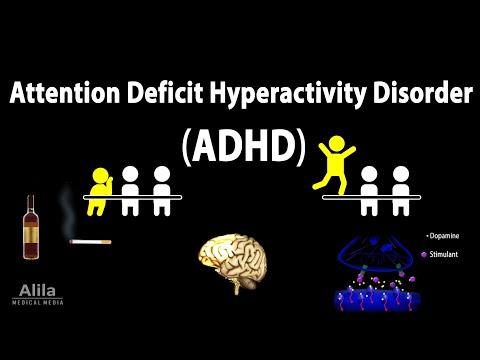
ADHD: Symptoms, Criteria for Diagnosis, Causes, Risk factors and Treatments. This video can be downloaded immediately here: t (c)Alila Medical Media. All rights reserved. Voice by Marty Henne Support us on Patreon and get early access to videos and free image downloads: patreon.com/AlilaMedicalMedia Alila Medical Media images and videos are provided for informational purposes only. They are not intended to replace professional advice, diagnosis, or treatment. ADHD is a common mental condition that affects children’s ability of functioning. ADHD, as the name implies, is characterised by hyperactive or impulsive behavior and difficulty paying attention. There are three types of ADHD: – Predominantly inattentive – Predominantly hyperactive, impulsive, – and the combined type with a mix of inattentive and hyperactive/impulsive symptoms. ADHD children are often markedly stigmatized because they have trouble with social interaction and perform poorly in school. ADHD can be cured in some children, but others may continue to experience symptoms until adulthood. It is not easy to diagnose ADHD. It is important to distinguish between ADHD and normal developmental behavior. Healthy children may sometimes be hyperactive, inattentive or impulsive. It’s normal for children to have lower attention spans than adults and be more active than their peers. ADHD symptoms must develop before the age 12, and continue for at least six month. They should also impact daily activities at school and at home. ADHD is not the only cause of problems in school, but at home and vice versa. Patients must have at LEAST SIX symptoms of ADHD to be considered ADHD. – Making careless errors by failing to pay attention to details.- You have trouble staying focused on tasks or playing – Not finishing tasks – Avoid tasks that require mental effort – Not listening to what is being said – Having trouble organizing – Losing things – Being forgetful – and being easily distracted For hyperactivity/impulsivity: – Fidgeting – Being in constant motion – Having trouble staying seated – Climbing on objects in unsuitable situations – Have trouble doing or playing quietly – Speaking loudly and using too many Talking about turn – They are having difficulty waiting – Interrupting other people’s activities The diagnosis is based on the patient’s history and interviews with relatives, parents, and teachers. To rule out any other conditions that might cause similar symptoms, physical exams are done. ADHD is a condition that has a strong genetic component. If a sibling has ADHD, a child is twice as likely to develop ADHD. This condition causes dysregulation of neurotransmitters such as dopaminergic receptors, and can also be associated with a decrease in frontal lobe dopaminergic receptors. Environment risk factors include pregnancy-related toxins, infections, nutritional deficiencies, premature births, maternal drug and alcohol abuse, as well as exposure to toxic chemicals. The treatment can improve symptoms and decrease the likelihood that they will persist into adulthood. There are many treatments available, including medications that can be stimulant or non-stimulant and psychosocial therapies. About two-thirds of ADHD patients are able to use stimulants. They are the first line treatment. Amphetamines, methylphenidates, and other stimulants are two examples. They prolong dopamine stimulation by blocking the reuptake. Dopamine is also released directly by amphetamines. Antidepressants and alpha-agonists are examples of non-stimulants. These are less effective and are often prescribed to patients who are unable to tolerate stimulants. Side effects can be serious and should be monitored closely. It can take time to find the best medication for each person and the lowest dose. Psychosocial therapies can include psycho-education for the whole family or psychotherapy for the individual. These therapies can be combined with medication to make them more effective.
Anxiety is defined as "a feeling of worry, nervousness, or unease about something with an uncertain outcome" and in psychology, also when perceiving a real or imagined threat. Anxiety is a feeling of tension or mental strain that occurs when people are exposed to negative, emotionally draining or stressful circumstances. What are the symptoms of physical anxiety? These are 6 Things Your Body Does When You Feel Anxiety.
#anxity #psych2go
Suggested videos:
The 5 Major Anxiety Disorders
/>
6 Signs That You Might Have Anxiety, But Not Know It
/>
Calming Relaxing Anxiety-Free Frequency:
M
Anxiety Playlist
/>
Featured Channel(s),
Brain Education is a YouTube channel dedicated to self-improvement for the brain. It offers weekly brain tips, routines and hacks. You can see their video about 6 exercises to increase neuroplasticity in the description.
6 Exercises to Enhance Neuroplasticity Video:
A
Credits
Script Writer: Kayleigh H.
VO: Lily Hu
Animator: Lesly
YouTube Manager Cindy Cheong
References:
Oxford Dictionaries "Anxiety"
Diffen: Parasympathetic and Sympathetic Nervous Systems
McEwen, B. S., & Stellar, E. (1993). Stress and the Individual: The Mechanism leading to Disease. Archives of Internal Medicine. 153(18), 2093-2101.