FOLLOW ME ON INSTAGRAM for quick, bite-sized mental-health tips /
FOLLOW ME ON TIKTOK s
WANT TO START IN THERAPY? Here’s a convenient and affordable option with my sponsor BetterHelp
For a monthly fee, you get a REAL licensed therapist with whom you can meet weekly by phone, video or chat. You can also send daily messages. For a full review of the service, watch this video w
If you use this link you will get a 10% discount on your first month. This is an option I’ve researched. I get a referral commission if you sign up.
Want to know more about mental health and self-improvement? On this channel I discuss topics such as bipolar disorder, major depression, anxiety disorders, attention deficit disorder (ADHD), relationships and personal development/self-improvement. I upload weekly. If you don’t want to miss a video, click here to subscribe.
Disclaimer: All of the information on this channel is for educational purposes and not intended to be specific/personal medical advice from me to you. Watching the videos or getting answers to comments/question, does not establish a doctor-patient relationship. If you have your own doctor, perhaps these videos can help prepare you for your discussion with your doctor.
There are some types of ADHD such as inattentive, hyperactive/impulsive and combined. Dr. Yadira Torres is a psychologist and Clinical Associate with Child Psychology Associates. She explains each type of ADHD and also confirms that symptoms can appear as young as three years.
https://medbusiness.net/adhd-types-symptoms/
This is a clip from my stand-up comedy special 'Shadows'. Click here to watch the entire show
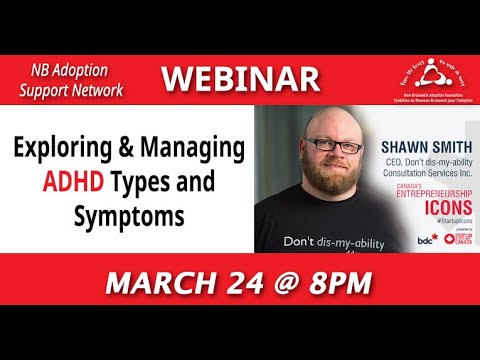
Shawn Smith, CEO of Don’t dis-my-ability Consultation Services Inc, shares his story of living now thriving with ADHD
will be covered.The three types of ADHD Symptoms of ADHD – There are many ways to get a diagnosis Strategies for parents of children with ADHD or other invisible disabilities Types of therapies available
Can ADHD meds like Adderall turn you into a better student with better grades?
Are Energy Drinks really that bad? M
Subscribe to ensure you don't miss a single video
Follow us on Instagram, Twitter and Facebook!
/
S
Find out more about our interviewees in our video
Gloria Joy Sherrod
/
t
Lisa Weyandt
/
/
What are ADHD meds? *
Stimulants are the most common ADHD drug. They stimulate and activate your central nervous system within 15 or 20 minutes of popping a pill. ADHD drugs, while stimulants are Caffeine, is not a stimulant. Adderall is one of the most popular stimulant medications in America. It is made from amphetamine and has been in use for many decades.
What is ADHD? *
ADHD stands for attention deficit hyperactivity disorder, and it's one of the most common mental health conditions in people under 18. It's similar to having 100 tabs open in your browser. But, in your brain, you start to pay attention to the wrong stuff and not what you really need. Adderall, the most commonly prescribed drug for ADHD in the United States, is the most popular.
*How can ADHD drugs be used to help ADHD patients? *
It all comes down to a neurotransmitter that is found in the brain, which you may have heard of: dopamine. This is crucial for your brain's reward systems. You can maintain motivation even if you aren't interested in something if you have a normal amount of dopamine in your brain's synapses. ADHD sufferers have less dopamine in their brains. This means that there is less motivation to do things. There's a greater desire for short-term reward to increase dopamine levels. ADHD medication works by increasing dopamine's retention in the synapses. ADHD patients can focus and avoid distractions. This can make it easier to get things done at school and work.
What happens if someone with ADHD uses Adderall? *
Although many studies done in the lab have not shown that ADHD patients get an increase in cognition, real-life situations such as writing papers and exams have not been fully tested. Many studies have shown that these meds can make you believe you are doing better than you really were. There are also serious side effects that could cause long-term problems.
SOURCES
Smart drugs are on the rise
Attention-deficit-hyperactivity disorder and reward deficiency syndrome
f
Morning stimulant administration decreases sleep and overnight work memory improvement
f
The effects of psychostimulants upon sustained attention for a 24-h period
America's First Amphetamine Epidemic
f
Neurocognitive Effects Of Adderall
f
Mixed Amphetamine salts in healthy people have both objective and subjective cognitive enhancement effects.
What is Cognitive Enhancement?
/>
About KQED
KQED provides a public-supported alternative for commercial media to the people of Northern California. An NPR and PBS member station based in San Francisco, KQED is home to one of the most listened-to public radio stations in the nation, one of the highest-rated public television services, and an award-winning education program helping students and educators thrive in 21st-century classrooms.
KQED members are supported by the Corporation for Public Broadcasting and the Koret Foundation.
CHAPTERS
0: 00 The Hype Around ADHD Drugs
0: 59 History Of Stimulants
2: 52 History and Treatment of ADHD
5: 41 Dopamine, ADHD
7: 20 The Non ADHD Brain on Stimulants
ADHD treatment is directly impaired by gut physiology and immunity as is often seen symptomatically in breakfast, picky eaters, and frequency of bowel activity - -
. Measured through IgG as documented in this important book by Dr. Alessio Fasano of Harvard: o
Dr. Parker’s book "New ADHD Medication Rules: Brain Science & Common Sense" available globally here: d
Must Listen:
t
Dr. Peter Osborne
#ADHD Medications PDF Reference: Med Details in Video and Audio
0: 36
- More than 460 articles on psychiatric diagnosis and treatment.
Playlists For More ADHD Med Details:
ADHD Meds Diagnosis Tutorial -- Overview: s
ADHD Meds Dosage: e
ADHD Meds Problems -- Mind and Gut:
ADHD Meds & Allergies -- Milk and Wheat: n
ADHD Meds & Allergies -- Street Immunity:
RSS For This Channel: d
For updates here: Subscribe here: e
Details in this Instruction PDF on Transit Time: The Transit Time Tool
This video addresses sensitivity to psych meds in general and how they can be relevant for understanding ADHD medication sensitivities. A video on ADHD Med sensitivities, digging a bit deeper into ADHD issues is here: E
ADHD Medication Dosage Strategies too often overlook this Important medical presentation - and in refractory medical treatments, more common than not, Transit Time is often the culprit/symptom.
Transit Time Instructions - Mouth to the South - 1 pg: t
IgG immunity reactions are the real culprits - see this post: /
This video gives just a quick overview of the relevance of measurement as opposed to the *denial of major ambiguityin the ADHD medication process.
*New ADHD Medication Rulesdiscusses the relevance of metabolism and biomedical corruptions in detail - see this link for details that work: Audible, eBook, Kindle, Paperback:
/
My point on this: Too many are treated for thinking problems - without specific thinking about the thinking process. To see the connection between brain science and common sense: evidence matters.
How can anyone get the meds right without *precise biologically based targets?See this link for all eight YouTube videos I've produced on this subject - a useful "ADHD Medication Tutorial" - here:
Take the time and go through them, no cost, no email request, just complimentary to help you understand problems that may need to be addressed and corrected.
Thanks for watching, more vids are coming so do subscribe to this channel, and tell your friends - a real ADHD Medication science does exist out there, it's simply underappreciated, and, regrettably, disdained by too many who are simply uninformed. If you are a professional and find these observations helpful do pop over to my professional training site for considerably more referenced details. The theme there: global medical citizenship through improved mind science initiatives.
What is ADHD? ADHD is a condition that can affect children and adults with the following symptoms: If you suspect your child might be suffering from the disorder, it is recommended to seek medical advice. There are many types of ADHD. In this article, we’ll cover the Types of ADHD, the signs, and Causes of ADHD. Learn how to get an accurate diagnosis. You’ll be more confident when making the right choice for your child’s future.
ADHD Signs and Symptoms
ADHD is an attention deficit hyperactivity disorder. While symptoms of ADHD may differ from one person to the next, they are often similar. ADHD children are often unable to sit still, and they often squirm and fidget. These behaviors can be caused by ADHD, their own inattention, or any other disorder. If your child is showing one or more of these signs may need to see an expert to be diagnosed.
ADHD children may have many things they want to do which make it difficult for them to complete tasks. They might not complete chores, homework, or games. They may have trouble keeping track of finances or other important details. They might experience sleeplessness and manage their finances. These symptoms can cause problems in several areas, such as relationships and careers. These symptoms can cause health issues.
It is difficult to identify ADHD. ADHD sufferers are six times more likely than other people to suffer from a related learning disorder or psychiatric disorder. This is due to the overlap of ADHD symptoms with other disorders. This is why many adults with ADHD struggle with undiagnosed symptoms and believed that their persistent difficulties were caused by other issues. The signs and symptoms of ADHD can disappear before the age of the age of 18, so it’s vital to get a professional diagnosis as early as possible.
Types of ADHD
There are three kinds of ADHD that include hyperactivity, inattention, and impulsivity. If you or someone you love should seek medical attention if you exhibit more than one of these symptoms. The best treatment for ADHD is based on your particular condition and is dependent upon the root causes of the disorder. A doctor can recommend a treatment program that will aid you in managing your symptoms and improve your overall well-being. To help you find an appropriate treatment plan, keep reading.
One form of ADHD is marked by the tendency to be impulsive. This condition is more common in children than in adults. Adults suffering from ADHD are typically affected by poor attention and an impulsive nature. Children with this condition tend to fidget with their hands or feet. In addition to not being able to remain still, those with this disorder also tend to have difficulty staying focused and listening to conversations. They are often restless and unable to complete tasks, and have poor working memory.
The hyperactive type exhibits more severe symptoms than the inattentive type, and is more likely to cause problems in the classroom. Children with this type are easily distracted and often are unable to resist their urge to look at everything in their environment. They often struggle to stop themselves from looking around and make poor choices that they regret later. They often have to face criticism from other people in order to be accepted by those who surround them.
ADHD: What are the causes?
There are many causes of ADHD. ADHD has been associated with the neurotransmitter neopinephrine. ADHD can be caused by the low birth weight, smoking during pregnancy, or neurological damage from heavy metal exposure. ADHD can be caused by a genetic change in one of the four genes in the glutamate-receptor metabotropic network (GRMN) according to Dr. Andre Venter at the University of Delaware.
Research has shown that ADHD is more prevalent among premature children or with low birthweight. However, not all babies born prematurely or having low birth weights will develop ADHD. There is a strong connection between smoking during pregnancy and offspring ADHD. The prevalence of ADHD was not reduced in the same way as maternal smoking during pregnancy. This is only some of the causes of ADHD. ADHD can be caused by lifestyle, environmental and dietary triggers.
ADHD is an inherited disorder that is found in up to one percent of children. It is linked to various neurodevelopmental disorders, such as autism and Down syndrome. Genetic research suggests that the disorder is related to exposure to lead during prenatal life and low birth weight and extreme low birth weight. Environmental risk factors can also increase the chance of developing ADHD such as exposure to chemicals such as lead. But more research is required to determine which factors are related to ADHD.
How do you know if ADHD Diagnosed?
A visit to a doctor is recommended if you suspect your child is suffering from ADHD. The consultation could last between 30 and 60 minutes and your provider will discuss the symptoms of your child and their school performance. They may also ask parents questions about the history of their child’s family and how ADHD has affected their lives. Some doctors may conduct an interview or send you a questionnaire prior to the appointment. ADHD diagnosis is usually based on the child’s behavior and reactions.
ADHD is usually first diagnosed when the symptoms are first observed. In general, ADHD symptoms are most evident in the first few years of a child’s education. The child may also have other issues if symptoms persist or worsen. A child’s physician can use behaviour rating scales to determine if the symptoms are linked to ADHD. These assessments are designed to evaluate the severity of your child’s symptoms. The doctor might also consider other conditions that may resemble ADHD, such as substance abuse or depression.
To determine if a child suffering from ADHD, a physician might apply the DSM-5 criteria. To establish a valid diagnosis, a physician must observe five of the signs of ADHD. These symptoms may change in some cases. In addition to the DSM-5 criteria, a thorough medical history check is necessary to rule out any underlying health issues. Doctors can also speak with parents and other caregivers about the child’s symptoms.
Treatments for ADHD
There are a myriad of different Treatments for ADHD that are aimed at alleviating a different symptoms. Cognitive behavioral therapy is a method to reprogram negative habits and encourage appropriate behavior. For example, social skills training can assist those with ADHD to be able to work with others. Other treatments, such as medication, can treat many issues related to attention, impulse control and an impulsive nature. Below are some of the most common ADHD treatments and the best way to select the most effective one.
ADHD is an neurodevelopmental disorder that affects the ways that a person thinks and processes emotions, as well as responds to their environment. This disorder can result in disruptive behavior at home and school for children. Adults who suffer from ADHD might also have difficulty working and at home. ADHD treatment is typically an amalgamation of medication and behavioral intervention. Other psychotherapeutic treatments are advised. These treatments can help people who suffer from ADHD improve their lives.
Neurofeedback is a highly-tech treatment for ADHD. In neurofeedback sessions, patients wear an electrode-lined cap to learn to match brainwave patterns associated with focus. The sessions take about 30 minutes and are completely painless however the cost can be substantial. Recent studies have not given conclusive proof for neurofeedback. Therefore, prior to investing in neurofeedback, be sure to take into consideration your personal situation before pursuing it.
ADHD in Adults
Although there aren’t any FDA-approved medicines for ADHD in adults, doctors often prescribe certain drugs. Tricyclic antidepressants like bupropion, fluoride, and venlafaxine are sometimes prescribed for ADHD symptoms in adults. Other medications are prescribed for those with an history of depression, psychiatric disorders that co-exist or both. While these medications may not be the most effective treatment options for ADHD in adults, they could be an effective treatment option.
Attention deficit disorder is a condition that can make it difficult for people to focus. This makes it difficult to listen to others or finish household chores without becoming distracted. Adults who suffer from ADHD might also lose their sense of time, missing deadlines or focusing on tasks that are not urgent. If you have a child with ADHD you might notice that you’re unable to manage all your obligations. Finding out the cause of your ADHD is the first step to the treatment of your condition.
An evaluation of ADHD for adults typically starts with a thorough medical history. Health care providers may inquire about your childhood and school experiences. They may request you to complete ADHD symptoms checklists and standard behavior rating scales. The doctor may also conduct psychological tests, such as tests to assess working memory, executive functioning, and reasoning skills. A formal diagnosis of ADHD is usually not made until the patient’s age and the severity of the condition are known.
ADHD Medication
While medication is the most effective treatment for ADHD but it’s not the only option. In addition to taking ADHD medications, some children also get therapy for their behavior. These therapies can help children learn how to manage their symptoms and develop coping strategies. They can also find support groups and schools certified in ADHD. These schools provide guidance for parents and teachers. While medications for ADHD is not the best option for every child but it is sometimes the only option if behavior therapy is unsuccessful.
Prescription medications are often prescribed for adults. The two most common types of ADHD medications are dexamfetamine and the lisdexamfetamine. These medications stimulate specific regions of the brain and improving concentration. They can also be used to reduce impulsive behavior or increase concentration. Both are approved for adults and are available as capsules. Both have pros and cons, but there is sufficient evidence to support the use of one or the other.
A few people who suffer from ADHD might also suffer from anxiety or depression. A doctor could prescribe Prozac as an antidepressant, in addition to the ADHD medication. However, there are significant differences between the two drugs. Monoamine oxidase inhibitors should not be taken with stimulants. Methylphenidate, on the other is a stimulant that increases brain dopamine levels. Methylphenidate, a safe and effective drug, is available in five forms.
Doctors, medical students, and others often ask me why I would give stimulants to ADHD patients who are already hyperactive. ADHD is an interesting condition. Getting the right treatment can transform a person’s life.
ADHD is characterized by hyperactive, inattentive and impulsive behaviors. To understand why stimulants work, we must first discuss the role of dopamine (and noradrenaline) in the prefrontal cortex. Prefrontal cortex is a favorite of psychiatrists. On this video I’ll explain some neurobiology and then how stimulants help to treat inattentive and hyperactive-impulsive symptoms.
SUBSCRIBE to receive new videos every Sat. and every Wed. A
Connect with me on socials:
Twitter: @elcarthy
Instagram: @dr.elliott.carthy
Track Info:
Title: Sunday Drive with Silent Partner
Genre and mood: Ambient + Calm
License: This song is yours to use and monetize.
Adderall, Concerta and Ritalin are all common ADHD treatments. TRT testosterone replacement therapy is another popular treatment for men. Can drugs that increase serotonin, such as SSRI antidepressants & Cerebrolysin, help to offset this?
Shawn Smith, CEO of Don’t dis-my-ability Consultation Services Inc, shares his story of living now thriving with ADHD
will be covered.The three types of ADHD Symptoms of ADHD – There are many ways to get a diagnosis – Strategies for parents of children with ADHD or other invisible disabilities Types of therapies available
There are some types of ADHD such as inattentive, hyperactive/impulsive and combined. Dr. Yadira Torres is a psychologist and Clinical Associate with Child Psychology Associates. She explains each type of ADHD and also confirms that symptoms can appear as young as three years.
A psychologist outlines types of depression other than clinical depression including High Functioning Depressive Disorder – Persistent Depression (PDD ) )Seasonal Affect Disease (SAD ) )Bipolar disorder Post Natal Depression Premenstral Dysphoric Syndrome
Follow Coi Leray:
Instagram: m
Twitter: r
Tik Tok:
Spotify: y
SoundCloud: d
Website: e
Visualizer by Fahmeed (@fahmeedx)
Lyrics:
[Chorus]
I still get anxiety. That's why I keep it in me
Sometimes, I feel like I don't have the trust of anyone around me
There is another side to me, but it's not .
C/Cause I had way too many people eating on me
I've been through depression, and I learned my lesson
So I thank my lucky stars and open it
However, I still get anxiety so I keep it in me
Sometimes, I feel like I don't have the trust of anyone around me
"Cause I got anxiety
"Cause I got anxiety
[Verse 1]
Yes, you can overthink
Conversation, complicated, and consequences
People talkin'
Get that paper and just get the money.
It doesn't matter what I do
It's either their love or their hate
It's been a long time since I was there.
They'll have to face it
I'm bound for greatness
They keep trying to take it , but I'm still in the first place.
Yeah yeah yeah !
[Pre-Chorus:Coi]
Have been getting high to relieve the pain
Yeah Yeah Yeah !
It would be nice if it could go away
[Chorus]
I still get anxiety. That's why I keep it in me
Sometimes, I feel like I don't have the trust of anyone around me
There is another side to me, but it's not .
C/Cause I had way too many people eating on me
I've been through depression, and I learned my lesson
I thank God and make it
However, I still get anxiety so I keep it in me
Sometimes, I feel like I don't have the trust of anyone around me
"Cause I got anxiety
"Cause I got anxiety
[Verse 2]
They try to break me, but I cannot let it stop me .
It's something I have to learn to accept
Even in the midst of chaos, Ima will always be the same me
Remember, I was starving and had to get it from bottom
All these problems are mine, and money won't fix them
I'm betting the house, but you have to proceed with caution
They love Coi you wildin’, Ima get it regardless
Too busy counting my money, I'm the hot topic
They talkin' because I'm the reason they talkin'. I only come out when I'm shoppin
Yes, that's right, Draco
My money therapy is the only way to fool me.
[Pre-Chorus:Coi]
Have been getting high to relieve the pain
Yes,
It would be nice if it could go away
[Chorus]
I still get anxiety. That's why I keep it in me
Sometimes, it feels like I can't trust anyone around me
There is another side to me, but it's not .
"Cause I had way too many people eating' on me
Been through depression, and I learned my lesson
So I thank my lucky stars and open it
However, I still get anxiety so I keep it in me
Sometimes, it feels like I can't trust anyone around me
"Cause I got anxiety
"Cause I got anxiety
#CoiLeray #Anxiety #Trendsetter
Video by Coi Leray, performing Anxiety (Audio). (c) 2022 Republic Records, which is a division UMG Recordings, Inc.