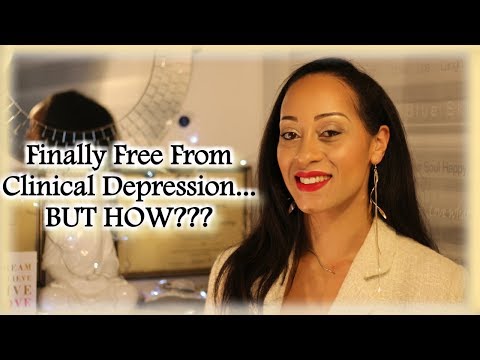
I’m so excited to finally share my final video in this series on Mental Health , where I go into detail about what has worked for me and helped me to completely recover from Clinical Depression, after experiencing it for at least 30 years! It seems rather perfect and synchronious that it is Mental Health Awareness month this month too.
DISCLAIMER
I want to make it very clear that nothing that I say in this video is prescriptive. I am not a medical Doctor, but rather I am sharing with you what has worked for me in the hope that you can take something from this that will help you too. If you are currently under the care of a medical professional, GP, psychotherapist, counsellor, etc. always seek guidance and support from them before making any changes to your care plan. I repeat, do not, under any circumstances make changes to your care plan without consulting the medical professionals who are supporting you.
Thank you for watching and please share with anyone you think needs to see this. I invite you to subscribe to my channel and turn the notifications on so you don’t miss any of my videos.
Resources:
Here is a link to the 1st blog post I wrote about my experience of clinical depression:
/
Here is a link to the2nd blog post I wrote about identifying the signs of clinical depression and knowing when to ask for help:
/
Here is a link to my video about identifying the signs of clinical depression and knowing when to ask for help:
The title of the book I mentioned is Recovery of Your Inner Child by Lucia Capacchione
And my email address for you to reach out to me for help is: hello@tlc-network.com
Thank you for watching!
Give me a “thumbs up” if you like my video and leave me a comment, letting me know what you like about it or what you would like me to make a video about 🙂
Here is the link to my blog, which I update regularly:
Blog:
And follow me on my other social media accounts:
Instagram:
Facebook:
Facebook:
Twitter:
See you again soon…
https://adhdadulttreatment.com/finally-free-from-clinical-depression-but-how/
What's the difference between stress, anxiety, and worry? And why does it matter? If we want to resolve our stress and anxiety, we need to know the difference and change how we respond to each form of anxiety. We often use the terms stress and anxiety interchangeably, but when we are lazy with our speech, it makes it harder to learn specific skills to resolve, treat, or cope with anxiety disorders.
Looking for affordable online counseling? My sponsor, BetterHelp, connects you to a licensed professional from the comfort of your own home. Try it now for 10% off: l
Learn more in one of my in-depth mental health courses: /> Support my mission on Patreon: l
Sign up for my newsletter: e
Check out my favorite self-help books: s
Check out my podcast, Therapy in a Nutshell: /
Therapy in a Nutshell, LLC, and the information provided by Emma McAdam are solely intended for informational and entertainment purposes and are not a substitute for advice, diagnosis, or treatment regarding medical or mental health conditions. Although Emma McAdam is a licensed marriage and family therapist, the views expressed on this site or any related content should not be taken for medical or psychiatric advice. Always consult your physician before making any decisions related to your physical or mental health.
About Me:
I’m Emma McAdam. I’m a licensed Marriage and Family Therapist, and I have worked in various settings of change and growth since 2004. My experience includes juvenile corrections, adventure therapy programs, wilderness therapy programs, an eating disorder treatment center, a residential treatment center, and I currently work in an outpatient therapy clinic.
In therapy I use a combination of Acceptance and Commitment Therapy, Systems Theory, positive psychology, and a bio-psycho-social approach to treating mental illness and other challenges we all face in life. The ideas from my videos are frequently adapted from multiple sources. Many of them come from Acceptance and Commitment Therapy, especially the work of Steven Hayes, Jason Luoma, and Russ Harris. The sections on stress and the mind-body connection derive from the work of Stephen Porges (the Polyvagal theory), Peter Levine (Somatic Experiencing) Francine Shapiro (EMDR), and Bessel Van Der Kolk. I also rely heavily on the work of the Arbinger institute for my overall understanding of our ability to choose our life's direction.
And deeper than all of that, the Gospel of Jesus Christ orients my personal worldview and sense of security, peace, hope, and love e
If you are in crisis, please contact the National Suicide Prevention Hotline at or 1-800-273-TALK (8255) or your local emergency services.
Copyright Therapy in a Nutshell, LLC
----
Music licensed from www.Bensound.com or Artlist.io
Images from Freepik.com (premium license), Pixabay, or Wikimedia commons


No comments:
Post a Comment